Tecno Pova 8 review

Verdict
In-depth review of the Tecno Pova 8
Introduction, specs, unboxing
Introduction
Tecno's Pova series usually works on a shoestring budget, but usually manges to deliver a surprising bit of hardware here and there. This time around Tecno focused on visual flair. The Pova 8 certainly looks interesting with its semi-transparent panel, funky camera island shape and the inclusion of what Tecno is calling an "Alive Matrix Display."
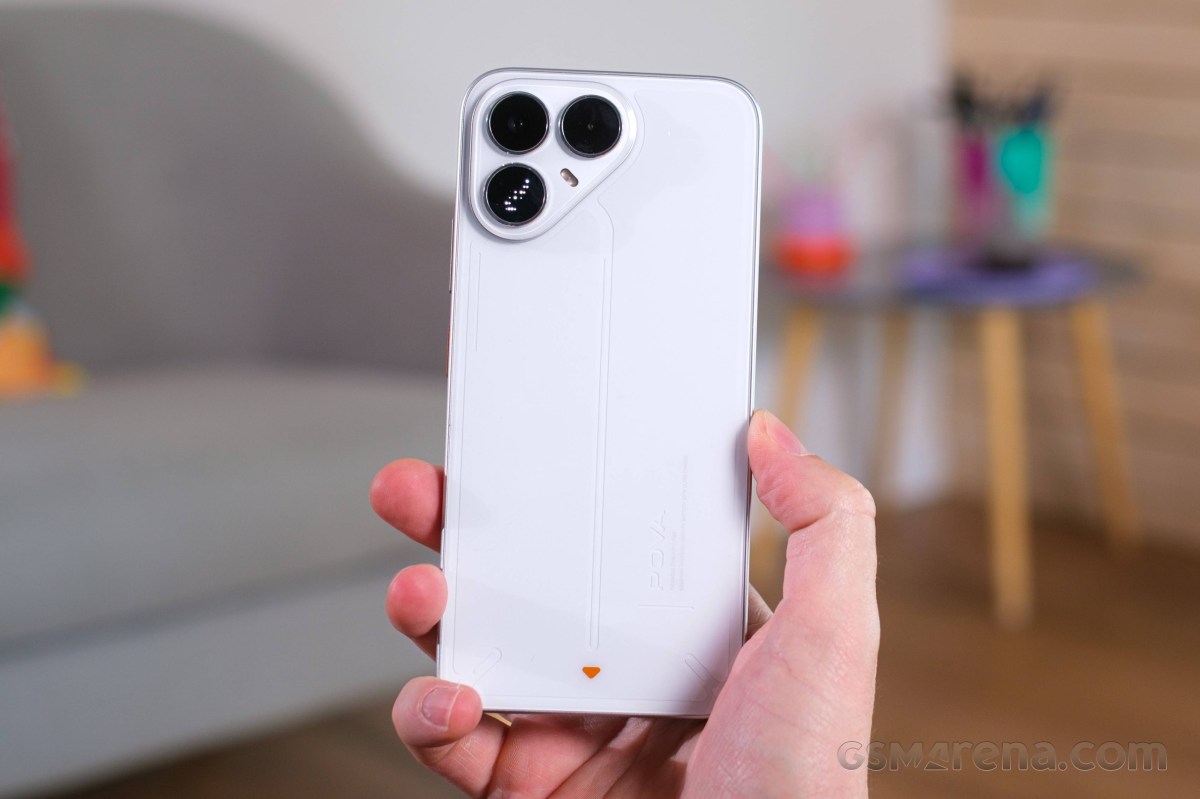
The Pova 8 also has some practical things going for it, like a big 8,000 mAh battery. The Pova 8 is also a dual-SIM 5G device and is powered by the decently capable MediaTek Dimensity 7100 chipset. Tecno even has two home-grown extra chips helping on the inside - one with network signal, the other with Wi-Fi.
Tecno Pova 8 specs at a glance:
- Body: 165.7x78.5x8.8mm, 225g; plastic back and plastic frame; IP64 dust tight and water resistant (water splashes), Round matrix display (on the back), MIL-STD-810H compliant.
- Display: 6.76" IPS LCD, 144Hz, 1080x2344px resolution, 19.53:9 aspect ratio, 381ppi.
- Chipset: Mediatek Dimensity 7100 (6 nm).
- Memory: 128GB 6GB RAM, 128GB 8GB RAM, 256GB 8GB RAM; UFS 2.2; microSDXC (uses shared SIM slot) - India model only.
- OS/Software: Android 16, HIOS 16.
- Rear camera: Wide (main): 50 MP, f/1.8, 23mm, 1/1.95", 0.8µm, PDAF.
- Front camera: 13 MP, f/2.2, 24mm (wide).
- Video capture: Rear camera: 1440p@30fps, 1080p@30/60fps; Front camera: Yes.
- Battery: 8000mAh; 45W wired, 50% in 35 min, 10W reverse wired.
- Connectivity: 5G; Wi-Fi 5; BT 5.4; NFC; FM radio, recording; Infrared port.
- Misc: Fingerprint reader (side-mounted); stereo speakers (with Dolby Atmos).
The main 50MP Sony LYTIA 600 camera won't be topping any quality charts, but it is a proven performer that should be above expectations for the class. While you do have to settle for an LCD panel, instead of an OLED, at least it can refresh at up to 144Hz.
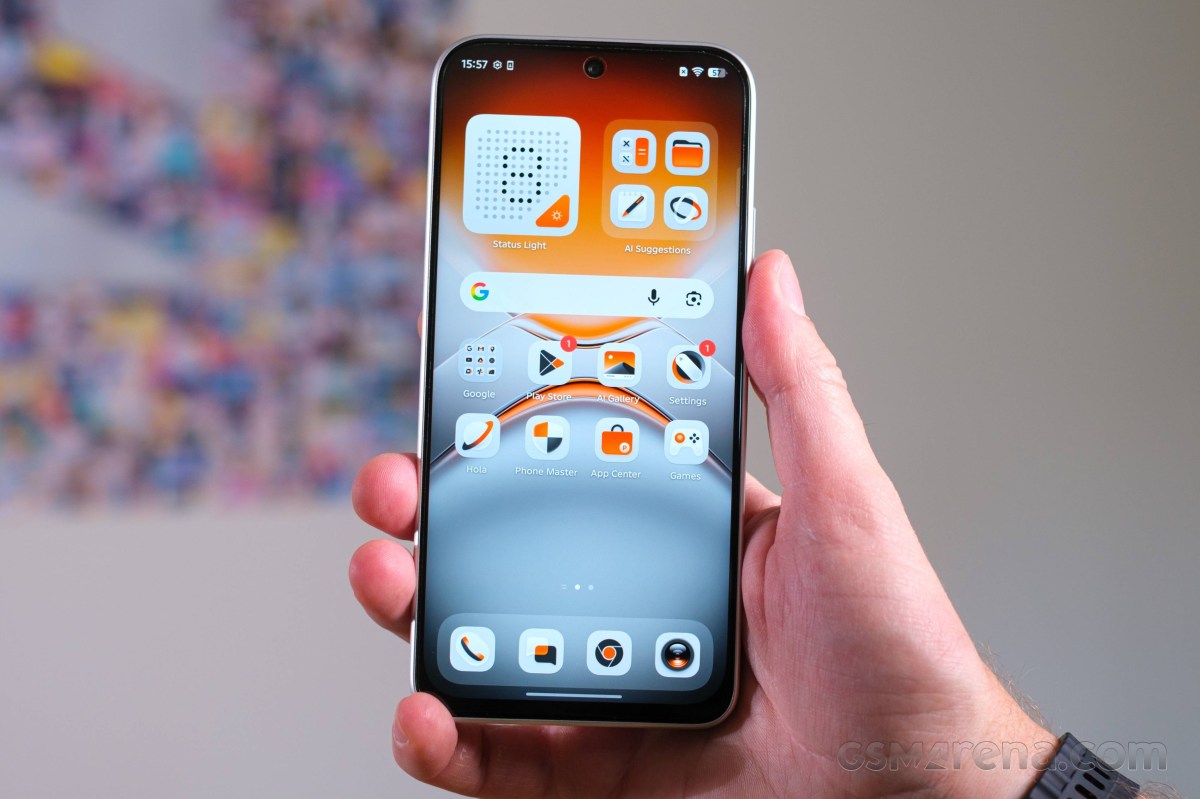
On the software side of things, Tecno invested in what it calls "Practical AI," offering things like AI Noise Cancellation and AI YouTube Summary. The Pova 8 itself comes with the promise of two major OS updates and three years of security patches. But we'll get to all that in a bit.
Unboxing
The Pova 8 ships in a two-piece cardboard box. It feels very sturdy and should protect the phone just fine during shipping. There is a cradle for the phone on the inside. It is made of cardboard, and there is seemingly no plastic in the packaging at all, which we can appreciate. The box itself is quite eye-catching thanks to its bright blue/violet (depending on how the light hits it) color scheme.
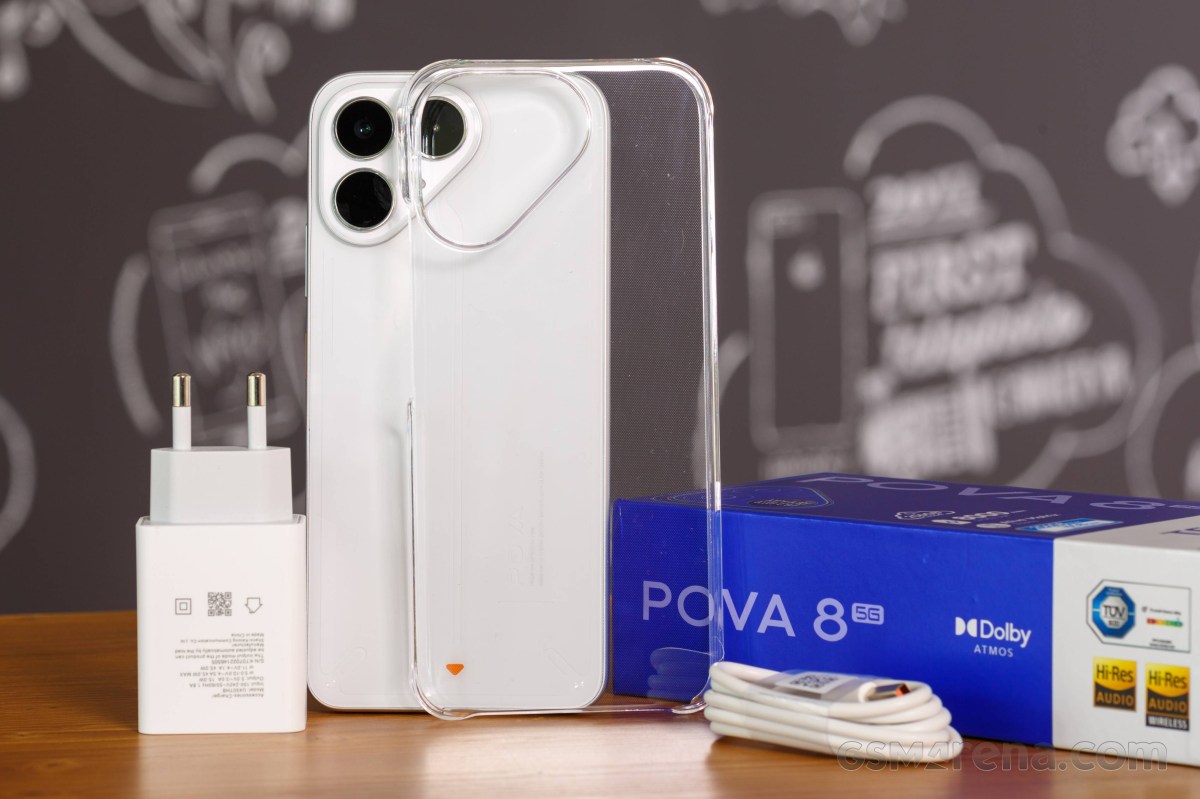
The Pova 8 ships with a 45W Tecno-branded charger - enough to maximize its charging potential. You also get a USB Type-A to Type-C cable, as far as we can tell, that cable is not actually proprietary and doesn't appear to use extra pins. However, the charger is designed to push up to 4.5A of current through said cable, so if you do end up replacing it, make sure you at least match that. Mind that if the Pova 8 comes to Europe at some point, the charger will be absent from the bundle.
Tecno also, rather generously, throws in a clear hard case for the Pova 8, so you can start using it right away worry-free.
Design, build quality, handling
Design, build quality, handling
Tecno went a bit experimental with the design on the Pova 8. Nothing too crazy, but definitely eye-catching. Of course, we are talking about the semi-transparent back design, which, by Tecno's own admission, was inspired by "interstellar spaceships". We can definitely see that. The Pova 8 has this futuristic thing going for it. The "signature triangle deco", as Tecno calls the camera island, is also tied together nicely with the rest of the design.
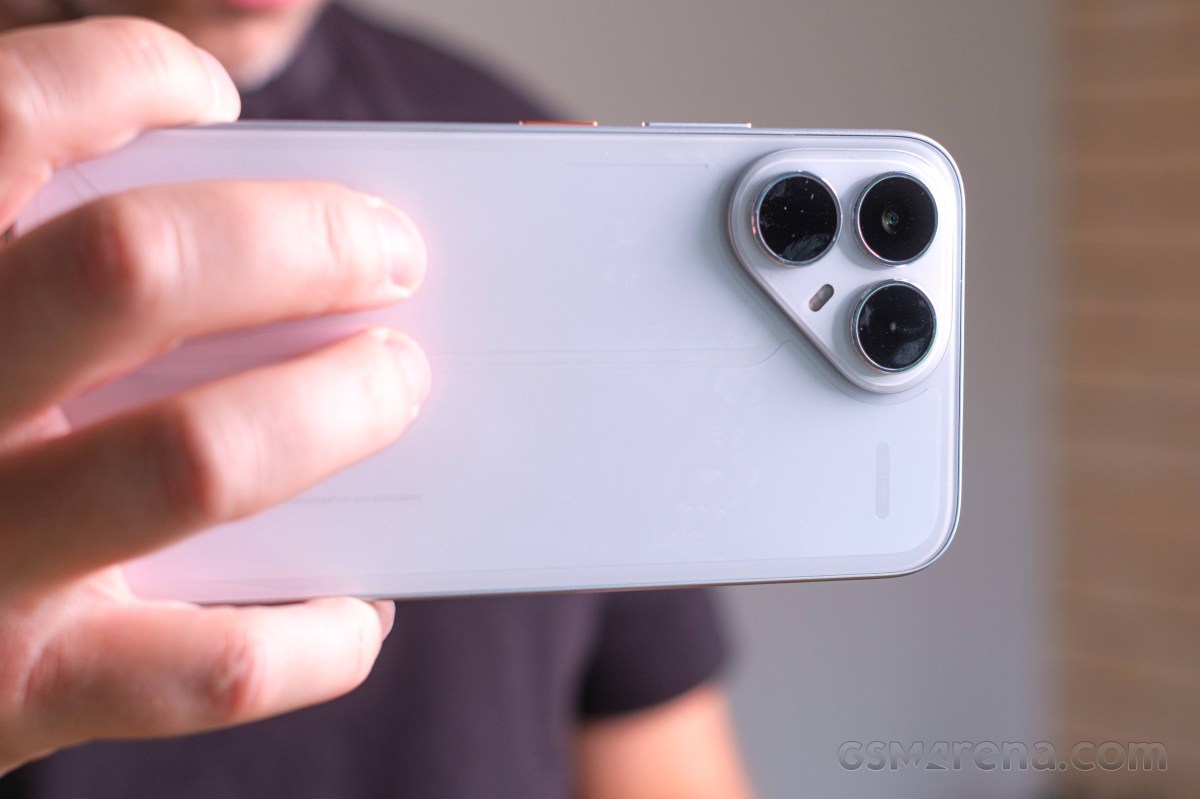
That said, we don't exactly get why the design team felt the need to include seemingly random writing on the back side. Near the top, next to the camera island, you can find "5G|NFC" and further down, written horizontally across are the inscriptions "MEDIATEK DIMENSITY 7100" and below that "8000 mAh HI-ENERGY DENSITY BATTERY WITH ULTRA CHARGE". It's a bit tacky in our opinion, but thankfully the text mostly blends in and disappears, at least on our white review unit.
Speaking of colors, ours is actually called "Arc White". Globally, it will be joined by "Graphite Black", "Helios Orange," and "Echo Green". In India, in particular, the Pova 8 has three different or at least differently-named color options. Techo just calls them "distinctive", so we can't exactly be sure if they are just the same colors with different names or not. Anyway, these are called: "16-Bit White", "Terminal Green," and "Plasma Orange".
While we haven't seen either in person, it seems that the green and orange variants are definitely not meant to blend in and just stay unnoticed.
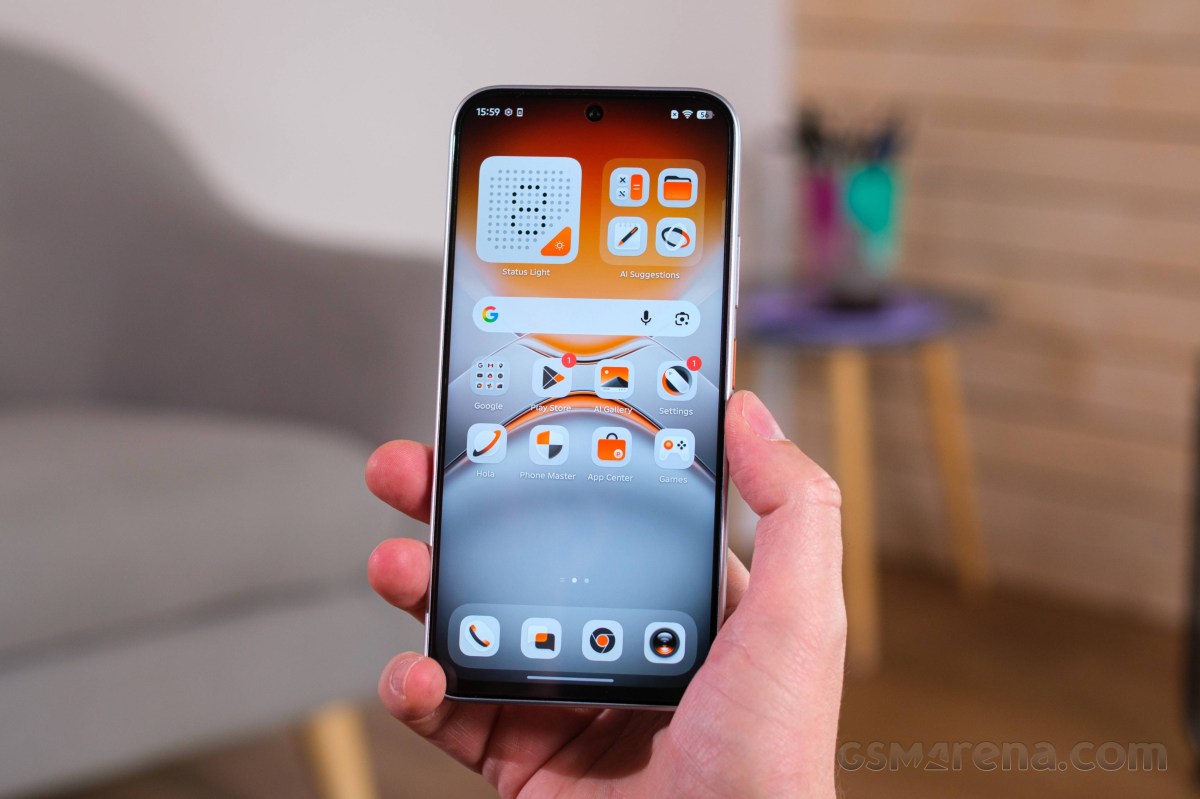
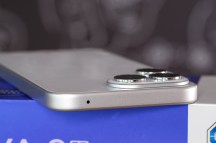
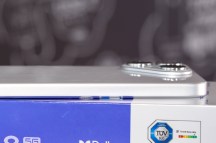
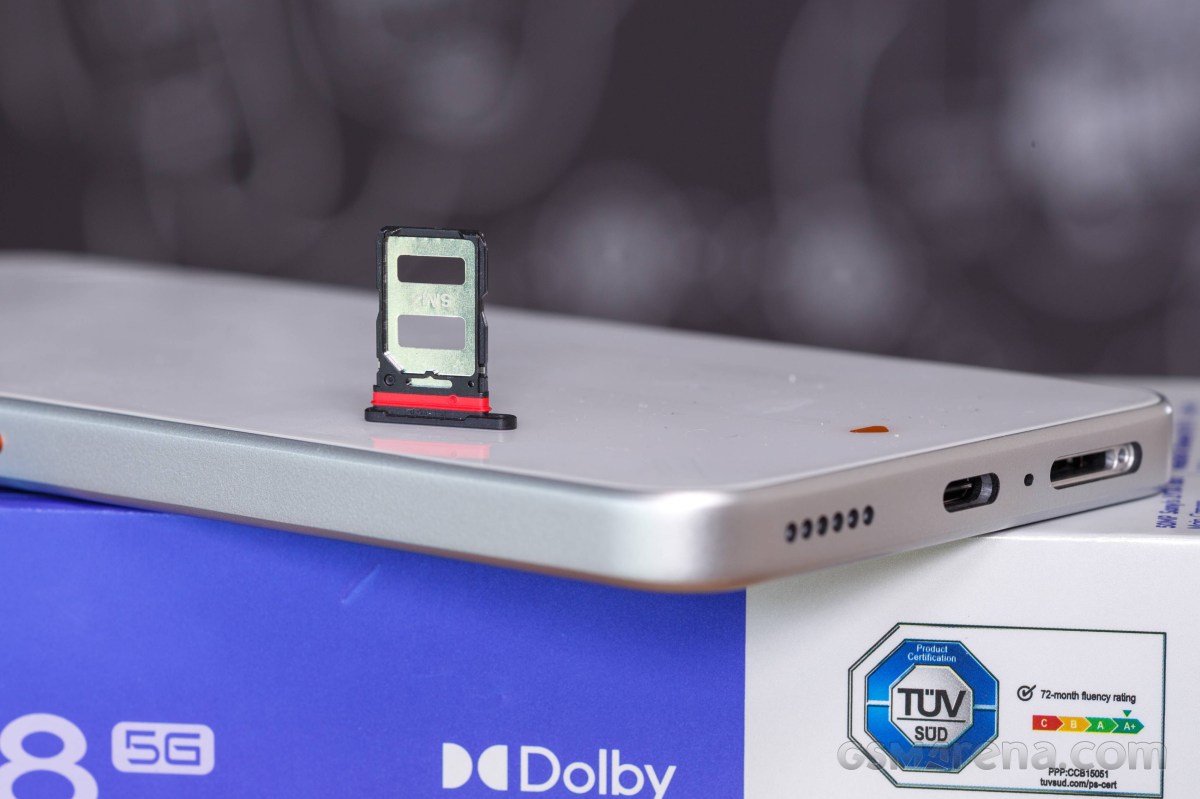
The Pova 8 feels solid and well-made. It has practically no flex in the chassis. The back is made of plastic, and so is the middle frame. There is some toughened glass on the front covering the display, but Tecno does not specify exactly what kind. The Pova 8 is marketed as "dust-tight and water-resistant". It has IP64 ingress protection and claims MIL-STD-810H compliance. There is, surprisingly, a rather thick rubber gasket around the SIM tray. Even so, we don't think submerging it is a good idea.
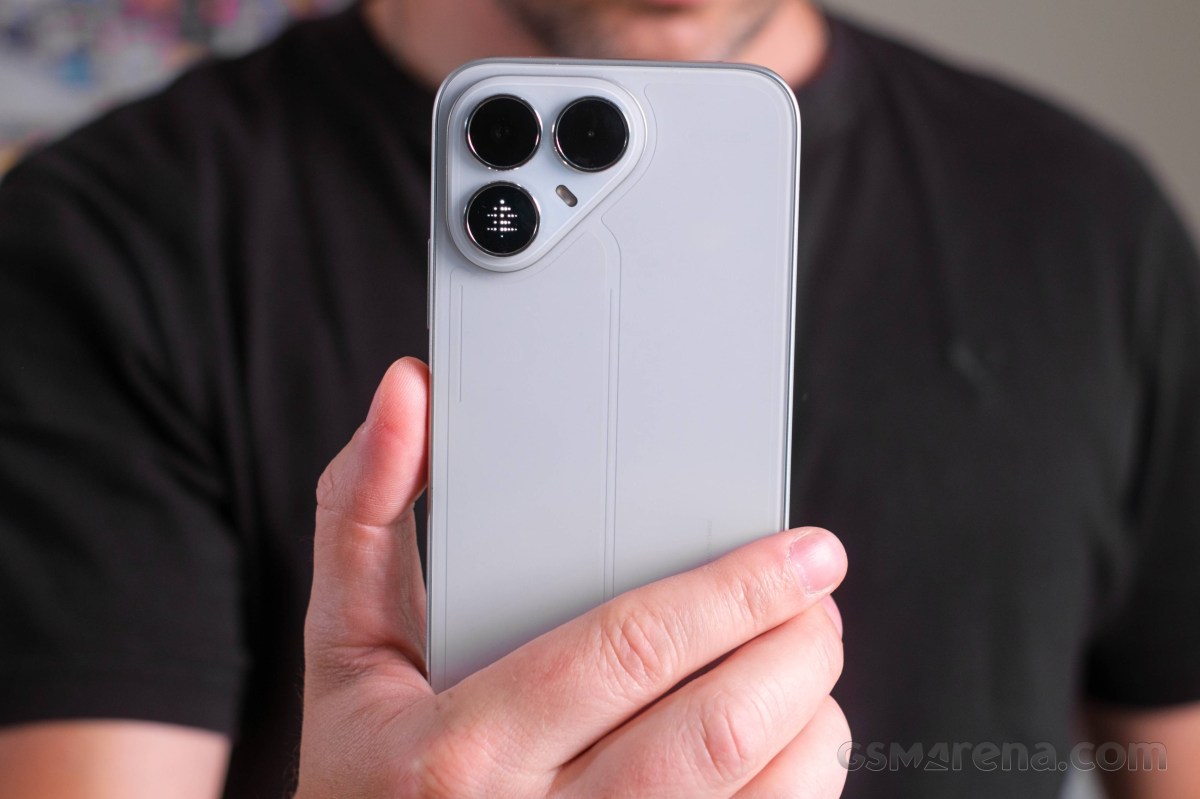
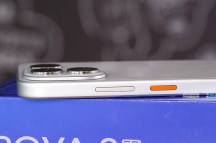
Circling back to colors for a bit, we definitely like how the orange accent finish on the power button looks on our white review unit. While on the topic of controls, there is nothing particularly weird about the Pova 8's setup. The power button and volume rockers are pretty well-positioned height-wise on the right-hand side. They are clicky and responsive.
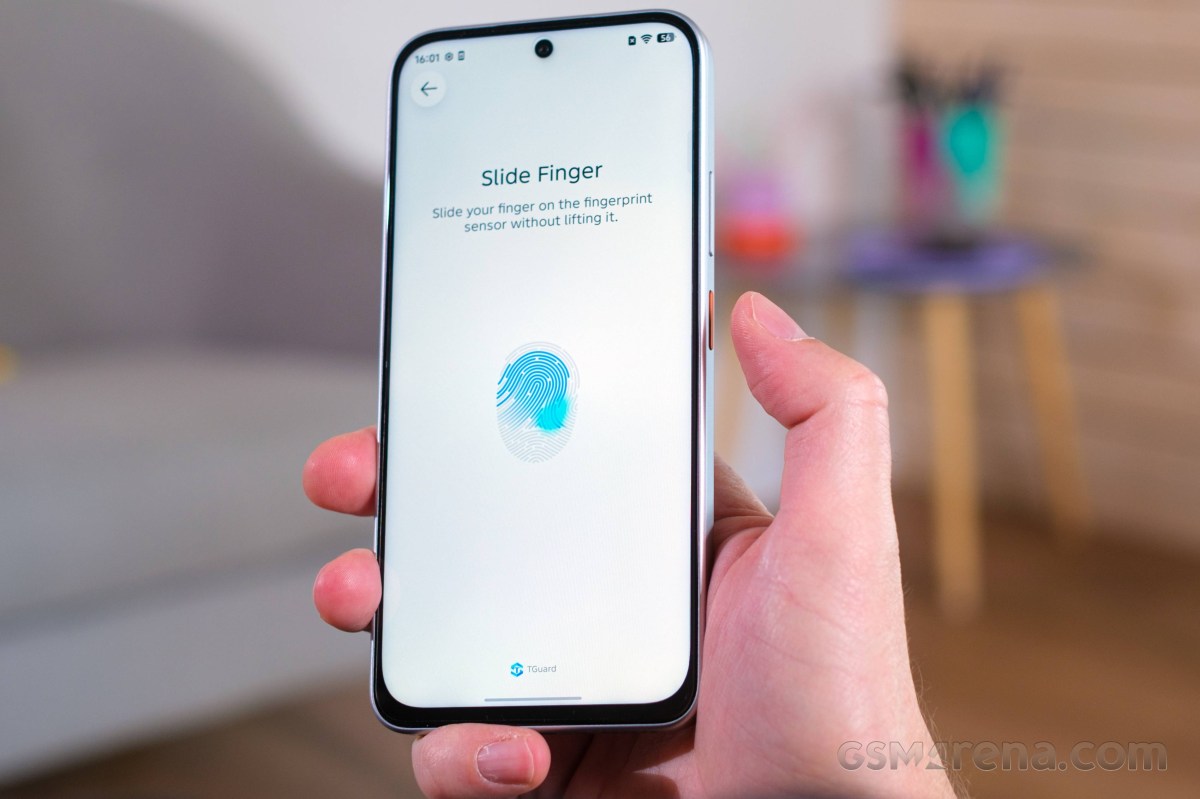
The power button incorporates a capacitive fingerprint reader. It is both snappy and responsive.
Tecno Pova 8
There is practically nothing on the left side. The top houses an IR blaster, which is convenient. Just like the writing on the back, we don't particularly appreciate the "Dolby Atmos" text on here. The bottom side has a large speaker grill, the main microphone hole, the SIM tray and the Type-C port.
There are no obvious controls visible at the front of the display. The earpiece/second speaker is just a slit hidden away above the display. All of the sensors are also hidden above the display.
Last but definitely not least, there is the Alive Matrix Display that sits underneath the two rear cameras. It consists of 117 total dots - 11 by 11 with a dot missing from each corner. The LED array is white and can get pretty bright. You can, of course, adjust said brightness. Techo has a set of 49 predefined "scenarios" for the LED matrix, recognizing and reacting to things like calls, notifications, music, gaming, charging and more.
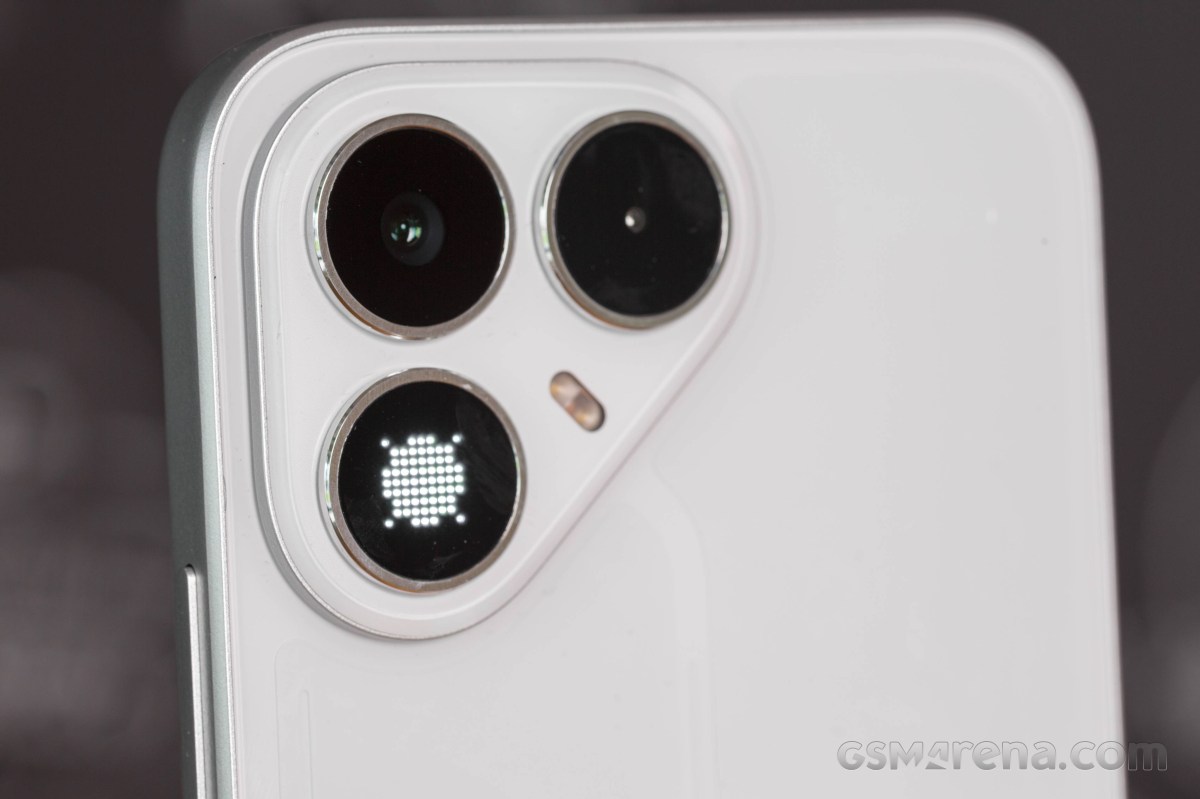
There is even a "spin the bottle" game you can play here, as well as a "throw the dice" game, and you can create your own light sequence as well. It's hard to imagine Techo hasn't taken at least some inspiration from Nothing on this front.
Our lab tests - display, battery life, charging speed, speaker
Display
The Pova 8 is a budget phone, so some corners had to be cut. The 6.76-inch display is one example. It still offers FHD+ resolution of FHD+ and can refresh at up to 144Hz, but it's not the most impressive around.
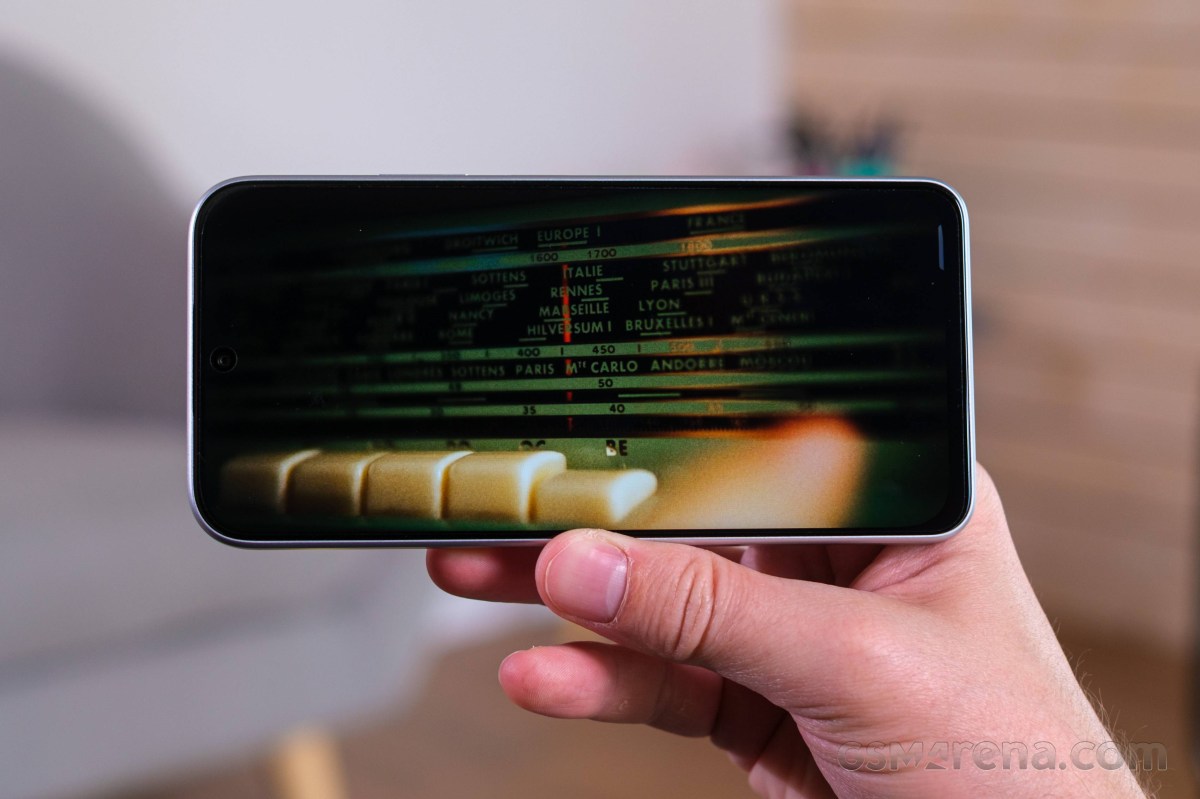
In our standardized measurements, the Pova 8 almost managed to crack 1,000 nits of brightness. That is with auto brightness turned on, as well as the additional "extra brightness" toggle enabled. In regular mode, by just maxing out the slider, we got around 650 nits. This is far from spectacular, but you shouldn't have too much trouble seeing the display even in sunny conditions. Direct sunlight may wash out colors, but still.
Max display brightness test
White test pattern (nits)
- Manual (75% fill)
- Auto (75% fill)
- Peak Auto (10% fill)

 Redmi Note 15 Pro 5G
 Poco X8 Pro
 Infinix Note 50 Pro 4G
 Tecno Pova 8
 Galaxy A26
 Galaxy A17
 Galaxy A07 4G
The 144Hz refresh rate sounds good on paper, but the Pova 8 doesn't exactly offer a whole lot of flexibility when it comes to actually using said refresh rate. There is a "high" refresh rate mode with per-app settings that does allow many apps to push past the 60Hz mark, but don't expect great consistency. High refresh rate gaming was always going to be a bit of a pipe dream with the Dimensity 7100 chipset.
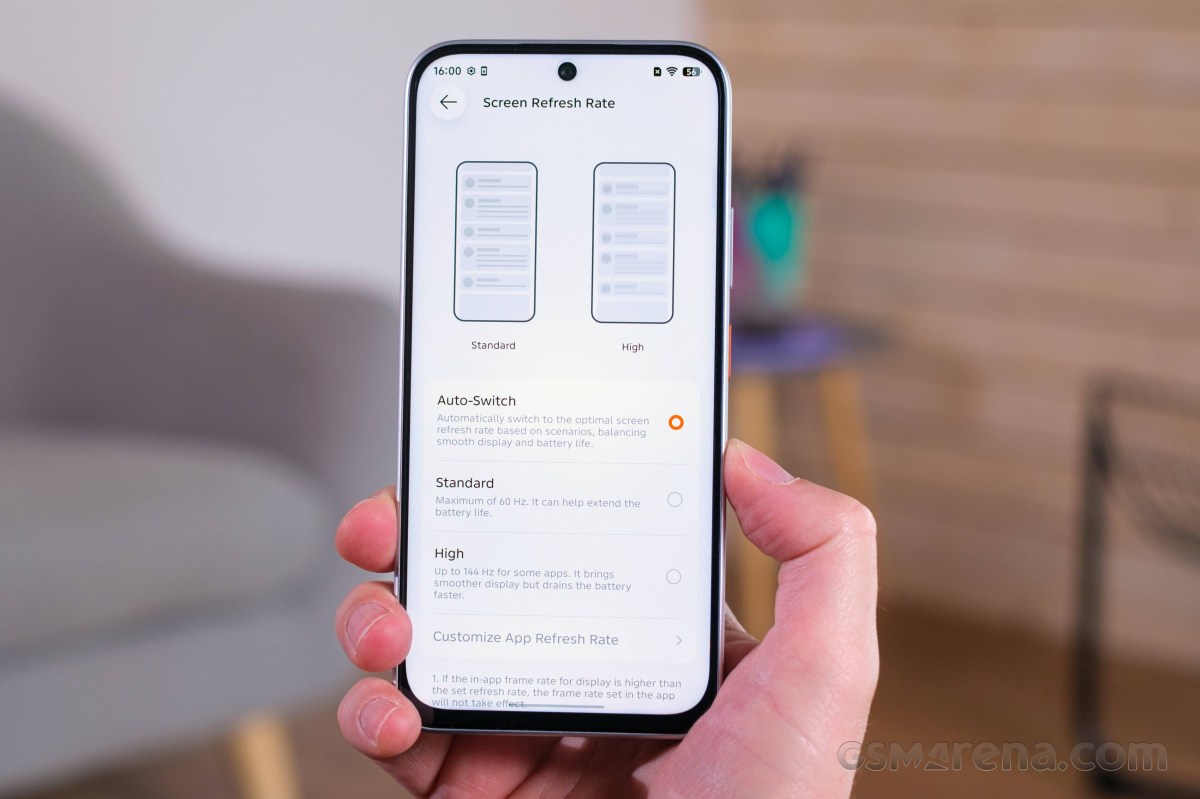
The thing that really ruined our visual experience, however, was sluggish pixel response times. The Pova 8 suffers from a lot of smearing while scrolling. On top of that, the display surface is quite reflective, which is not ideal.
As you can imagine, there is no hardware HDR support here. The phone does report that it can decode HDR10, HDR10+ and HLG, just no Dolby Vision, but it won't be able to take full advantage of it. On a more positive note, at least it has the highest possible Google Widevine L1 DRM certification, allowing apps like Netflix to offer up FullHD streams.
Battery life
The large 8,000 mAh battery is arguably the key selling point of the Pova 8. With its fairly efficient chipset, it is well positioned to achieve excellent battery life.
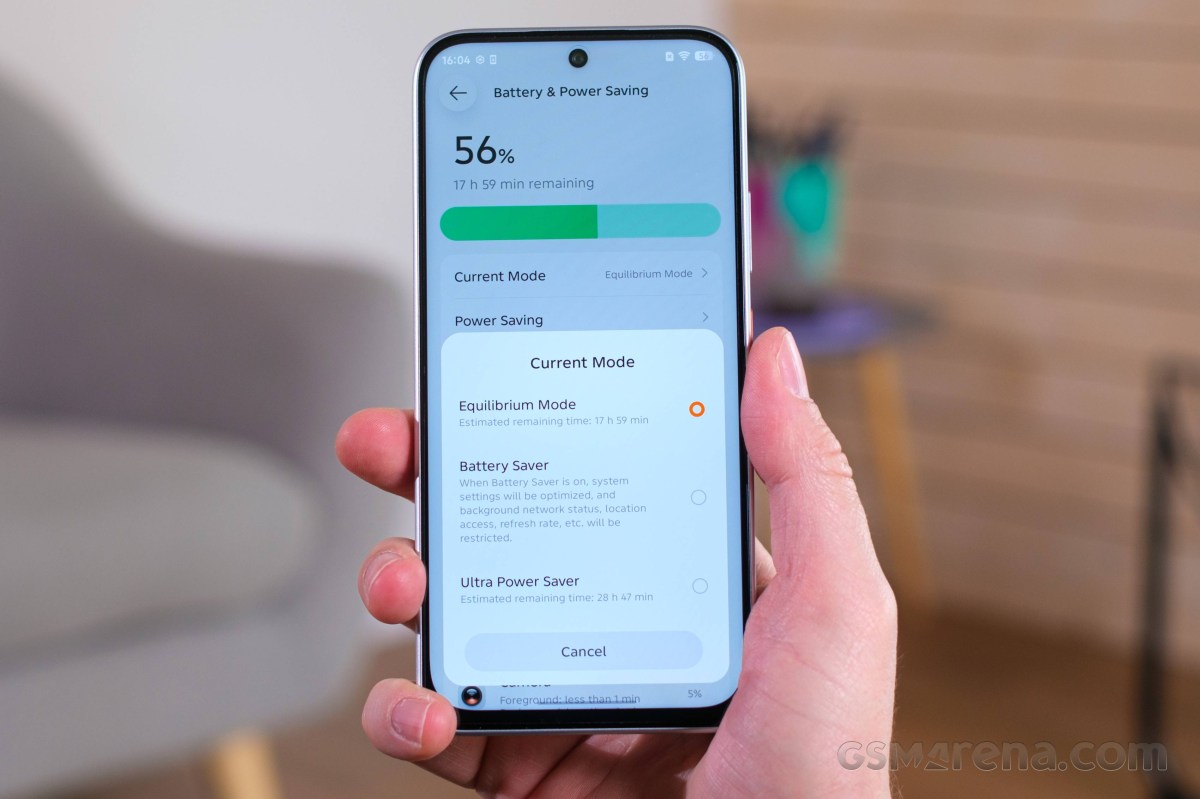
And while the Pova 8 certainly does not disappoint in the battery department, frankly, we expected a bit more still. The Active Use Score of over 17 hours should be enough to live up to Tecno's marketing claims of two-day battery life. At least with most casual users.
Charging speed
The Pova 8 supports 45W Tecno fast charging. It is proprietary, but luckily you do get the charger and accompanying cable in the box in most places.
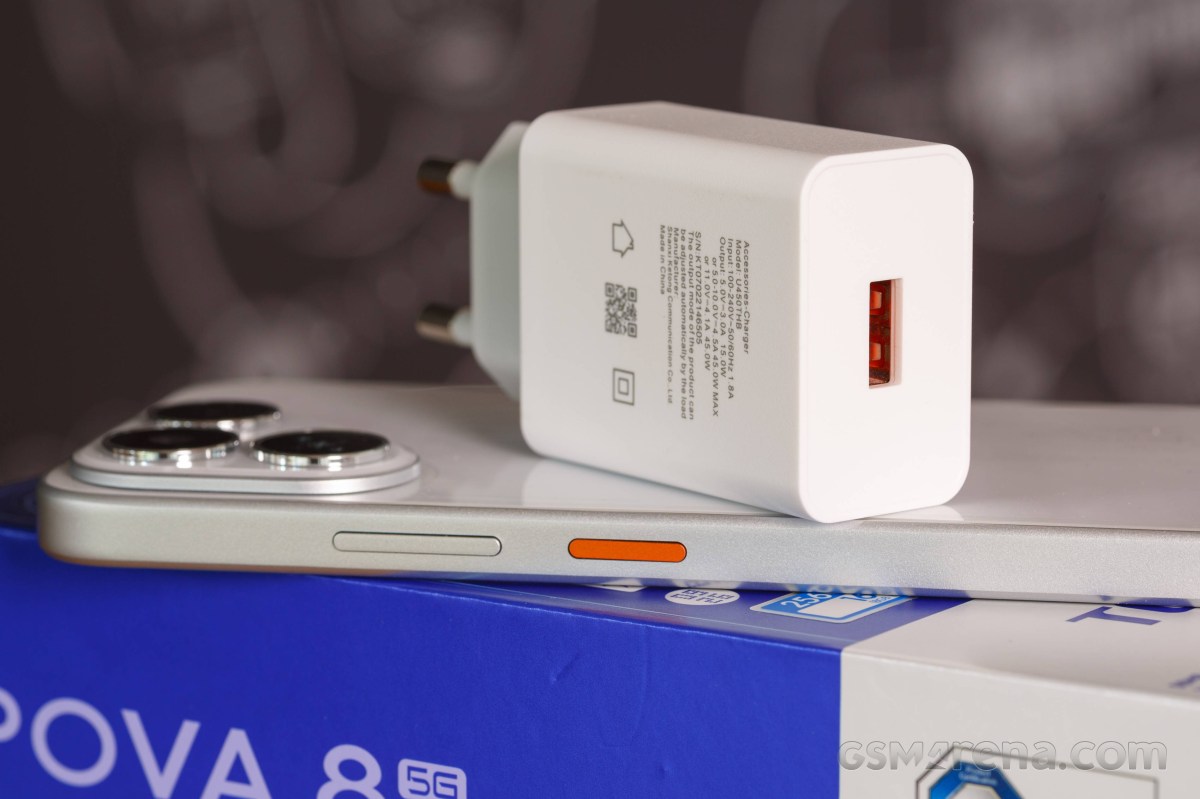
To be perfectly frank, we expected a bit faster charging times. We made sure to do a few charging runs just to make sure everything was working properly and diligently selected the kind of obscure rapid charging option from the charging notification each time. Tecno claims 45W but in our measurements, the actual charging never really exceeded 25W.
Tecno claims that the Pova 8 can fill its large battery up to 50% in 35 minutes. In our experience it is more like 39 minutes. Fifteen minutes on the charger resulted in 22% charge, thirty minutes gave us 39% and a full charge took just shy of an hour and a half. Not particularly impressive numbers, but not terrible either.
Charging speed
- in 15 min
- in 30 min
- Time to full charge (from 0%)
 Infinix Note 50 Pro 4G
Galaxy A17 5G
Redmi Note 15 Pro 5G
Infinix Note 50 Pro 4G
Galaxy A17 5G
Redmi Note 15 Pro 5G
 Infinix Note Edge
Galaxy A07 4G
Tecno Pova 8
Infinix Note Edge
Galaxy A07 4G
Tecno Pova 8
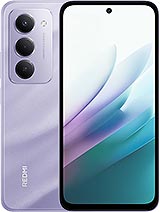 Redmi 15 5G
In terms of battery protection features, Tecno offers Bypass Charging option, AI Charging protection (based on your routine), and Custom Charging Protection (setting a charge limit between 80% and 95%).
Speakers - loudness and quality
The Tecno Pova 8 has a dedicated bottom-firing speaker. The earpiece is outputting some audio as well and acting as a second channel, of sorts. However, the earpiece is really quiet, almost as if it is not amplified at all. Plus, you don't really get proper stereo channel isolation with the bottom speaker outputting both the left and right channels - probably so you can even hear the left. That aside, quality is actually surprisingly decent. Nothing spectacular, but mids come through clearly.
Unfortunately, the Pova 8 isn't particularly loud at all.
There are some rather interesting onboard audio enhancements to explore. The Pova 8 seems to have Dolby Atmos support, and the settings menu even suggests it's not just for headphone use. We really don't see how any of the "smart" presets will even make much of a difference since the phone effectively lacks stereo, but it is what it is.
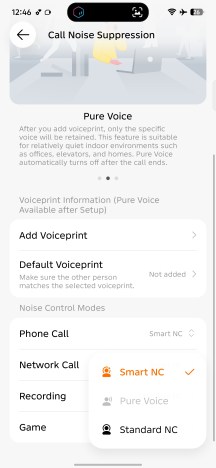
One of the "practical AI" features is "Call Noise Suppression", or at least that's what it's called in the settings menu. That title undersells the feature a little bit since it can actually work for recordings and in-game comms as well as calls.
Call Noise Suppression
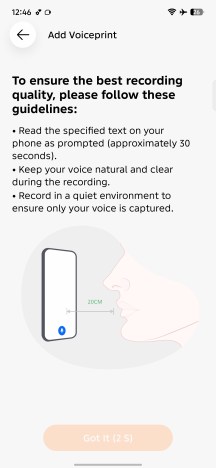
There is also standard Noise Control, which is your basic active noise cancellation. Ot top of that, there is a Smart option that promises to only activate when there is surrounding noise. The third and most interesting option is called "Pure Voice". The way it works is that the user records their own voice and creates a "voice print", which the system can then identify and isolate, filtering out any other voices. However, Tecno does note that this will only work correctly in a relatively quiet environment like an office setting.
Use the Playback controls to listen to the phone sample recordings (best use headphones). We measure the average loudness of the speakers in LUFS. A lower absolute value means a louder sound. A look at the frequency response chart will tell you how far off the ideal "0db" flat line is the reproduction of the bass, treble, and mid frequencies. You can add more phones to compare how they differ. The scores and ratings are not comparable with our older loudspeaker test. Learn more about how we test here.
Connectivity
The Pova 8 is a dual-SIM device. It has two Nano-SIM slots that can offer concurrent SA/NSA Sub-6 connectivity. Unfortunately, there is no eSIM support. Location services include GPS, GLONASS, GALILEO and BDS support. Local connectivity is covered by dual-band Wi-Fi 6/ac and Bluetooth 5.4 with LE support. There is NFC on board as well as an IR blaster. There is even an onboard FM radio receiver. You just need to plug in a pair of Type-C headphones to act as an antenna to use it.
Our review unit lacks a microSD card slot, but a few device listings online do mention a hybrid SIM slot 2 that can accommodate expandable storage. As far as we can tell, the Indian model has it.
The Type-C port is backed up by a simple USB 2.0 data connection, which means a theoretical throughput of up to 480 Mbps. There is USB Host/OTG support, but nothing fancy beyond that, like video output over USB Alt mode.
The Pova 8 has a pretty decent sensor loadout. That includes an st lsm6dso accelerometer and gyroscope combo, a memsic mmc5617 magnetometer and compass combo and a sensorek stk63761A light and proximity sensor combo. Yes, despite its modest price, the Pova 8 gets an actual hardware proximity sensor and not a virtual one. There is no barometer on board.
Software and performance
HiOS 16 on top of Android 16
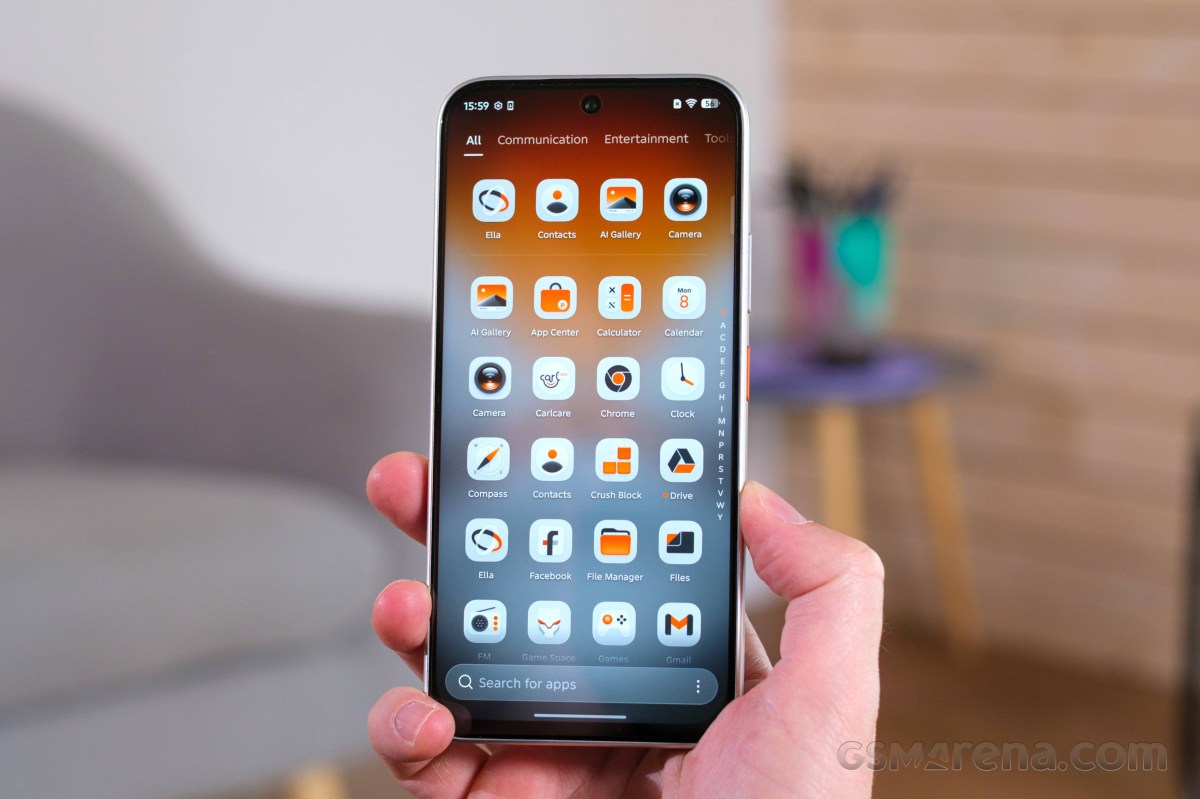
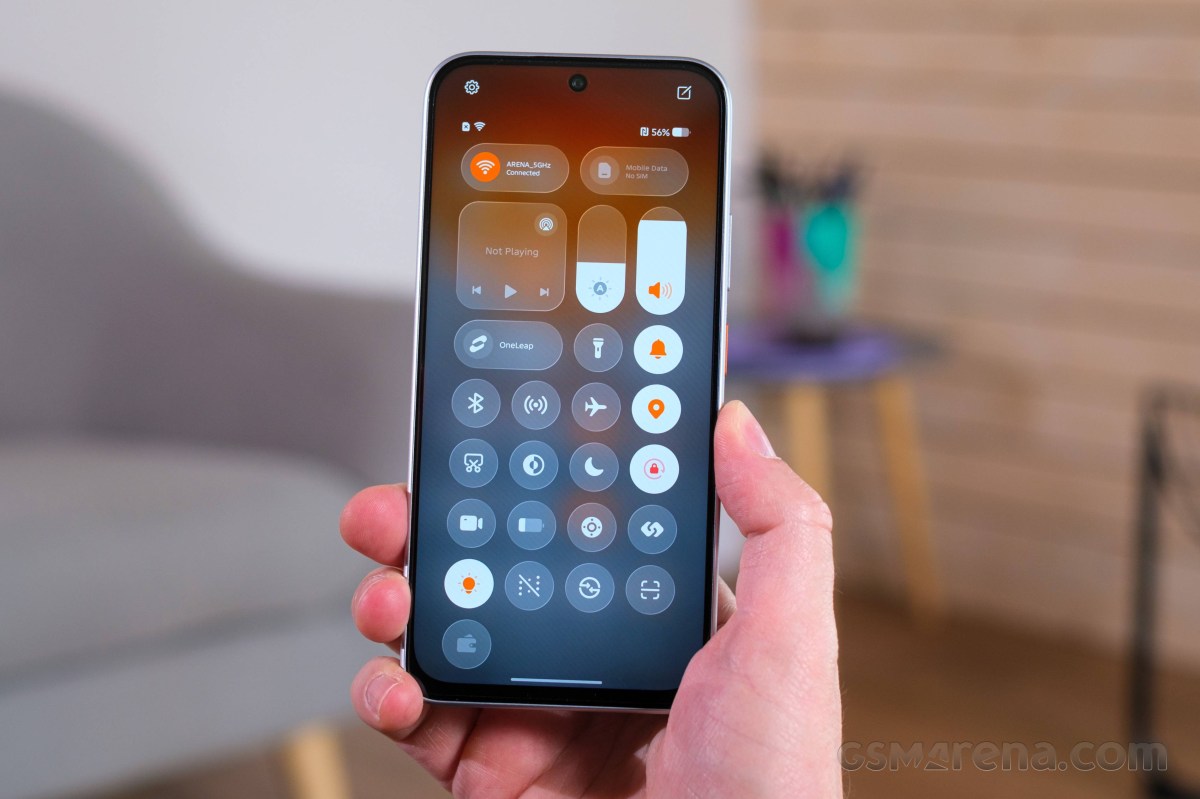
The Pova 8 boots Android 16 with Tecno's own HiOS custom software on top. Our review unit arrived with HiOS 16.2, which didn't seem drastically different than the 16.0 version we have previously seen.
The Pova 8 comes with the promise of two major OS updates and a total of three years of security patches. A pretty modest support cycle by modern standards, if we have to be fair, but still alright for a budget device.
HiOS 16 brings a notable expansion of the customization options. The updated Always-on Display offers a wider selection of styles and personalization features, though it still isn't truly "always on" and only remains visible for up to 15 seconds at a time. The lock screen and home screen customization has also been enhanced with depth effects, allowing for a more modern and personalized look.
There is also an AI Theme Generator and a 3D Wallpaper generator.
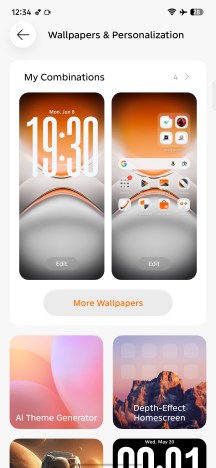
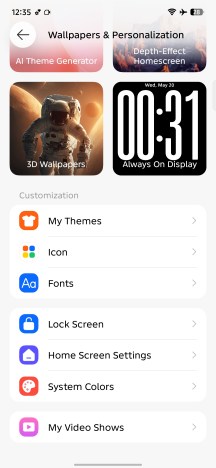
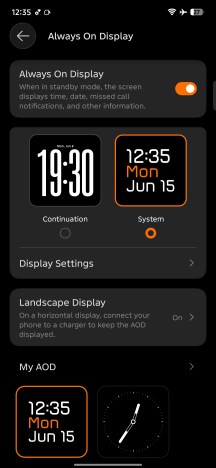
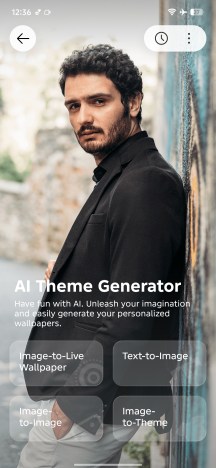
Customization options
The Android OS, even with Tecno's HiOS skin, is pretty straightforward.
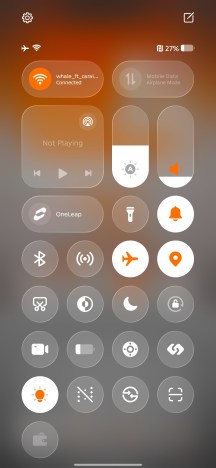
HiOS 16
The lockscreen has a couple of shortcuts on the bottom - one for the camera, and the other for the flashlight.
Multitasking features include split-screen and pop-up window modes for supported apps - nothing out of the ordinary.
Multi-tasking
HiOS 16 comes with a handful of pre-installed apps and utilities, but the overall software package remains reasonably clean. Tecno includes its own Gallery, Video Player and Browser apps, while notably avoiding the addition of a proprietary app store.
The software also features Tecno's in-house AI assistant, Ella. It supports voice wake-up and spoken responses and offers a broad range of AI-powered tools and features. Most of its functionality relies on an active internet connection to access cloud-based AI models (you can choose between quite a few of them), though basic device controls and system-related tasks can still be handled locally without connectivity.
Ella
We already mentioned the Alive Matrix Display briefly, but we should also go over the basic customization options and features it offers. As a refresher - it is a 117-dot white LED matrix on the back of the phone, housed inside what looks like a third camera module.
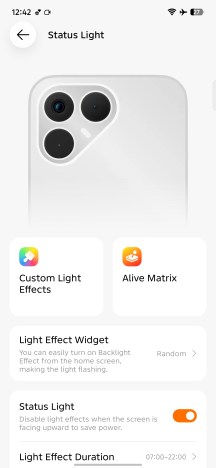
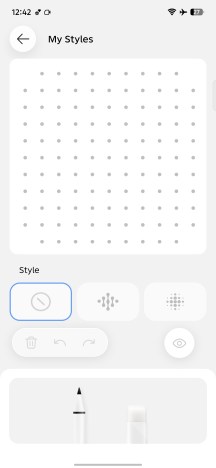
Status Light
You can, of course, use the LED array as a notification light replacement with a little extra sophistication. There are actually 49 predefined "scenarios" for the LED matrix, recognizing and reacting to things like calls, notifications, music, gaming, charging and more. You can adjust the brightness, put the display on a schedule and even design your very own animations using the pretty intuitive tool.
By Tecno's own description, the AI features included with the Pova 8 are meant to be practical and "designed for everyday efficiency". We already took a quick look at the company's own Ella assistant and browsing through its menus, it comes as no surprise that it can actually do quite a few things like write or refine text, generate images and do quite a few tasks with your phone as well, like call people for you.
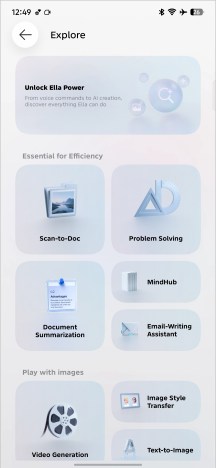
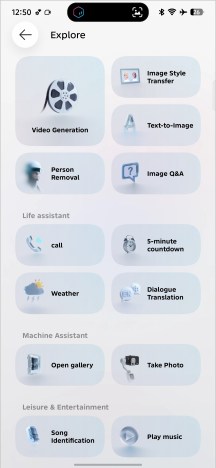
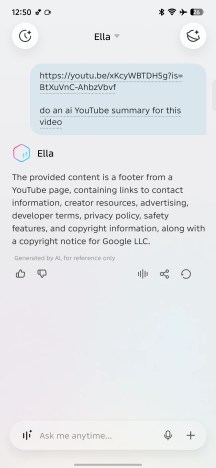
Ella features
One of the more interesting features Tecno advertised to us for the Pova 8 is the AI YouTube summary. However, we didn't really find exactly how to make it work on our unit.
An AI health assistant is also part of the loadout. This one we did spot, but we presume it needs access to a lot of historical stats and data to actually start being useful.
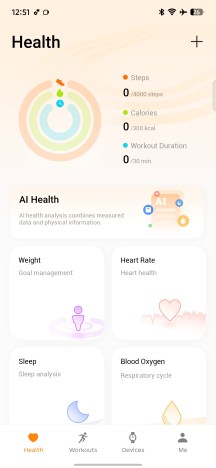

AI Health
We already mentioned the Call Noise Suppression feature, and it is worth revisiting since it is not something you see every day, particularly the "Pure Voice" option that is meant to detect your particular voice based on a voiceprint and only let that come through. We did give it a try ourselves and got mixed but not disappointing results. As long as there isn't too much noise in the environment and only like one or two additional people are talking at the same time as you, ideally not too loud and a bit further away, it works as advertised.
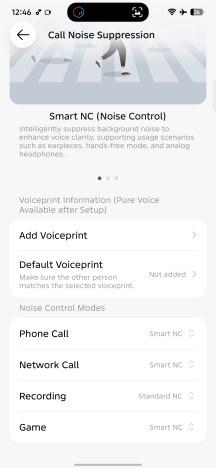
Call Noise Suppression
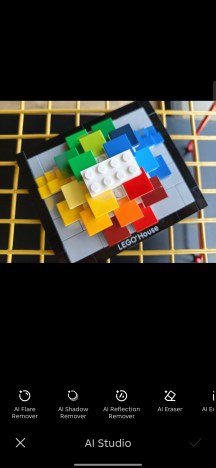
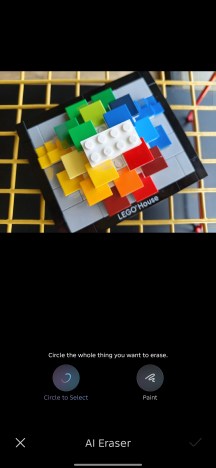
There are a few more AI tools scattered around, notably in Tecno's native image gallery and particularly the image editor. You can use AI to remove shadows, reflections and flare, as well as delete objects from the frame and generatively expand the size of the image.
AI image editing tools
Performance and benchmarks
The Pova 8 runs on the MediaTek Dimensity 7100 chipset. It is not a powerhouse by any stretch of the imagination, but it is still a very recent chip with great features and connectivity, made on an efficient 6 nm TSMC node.
In the CPU department, we find a rather conventional and a bit "old school" symmetric four by four setup with four Cortex-A78 units, working at up to 2.4 GHz and four Cortex-A55 ones, clocked at up to 2.0 GHz. Nothing too fancy. The onboard GPU is a Mali-G610 MC2 clocked at 1.0 GHz.
The Pova 8 starts with 6GB of RAM, but that is just for the base 128GB storage version. If you step up to 256GB, you get 8GB of RAM, and in some markets, an 8GB/128GB version existс as well. The storage chips are of the rather modest UFS 2.2 variety, but we can't really be too mad considering the budget price point. It is also perhaps worth noting that Tecno offers three years of free 256GB cloud storage for Pova 8 users and, in select markets, 3 months of Google AI Plus (2 TB) for free as well.
The actual benchmark results confirm that the Dimensity 7100 is not a particularly powerful chip. You can do a lot better in this price bracket if that is what you are after. That said, it does alright in both the CPU and GPU departments, and beats the likes of Helio G series chips.
GeekBench 6
- Single-core
- Multi-core
Poco X8 Pro
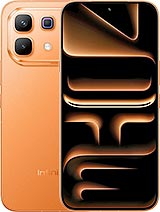

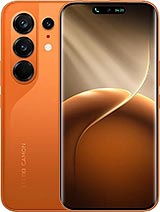
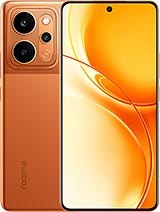
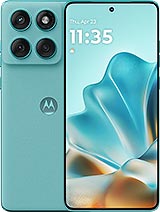 Motorola Edge 60 Fusion
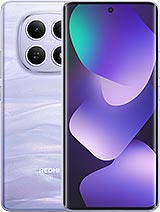 Redmi Note 15 5G
Tecno Pova 8
Infinix Note Edge
Galaxy A07 4G
Redmi Note 15 5G
Tecno Pova 8
Infinix Note Edge
Galaxy A07 4G
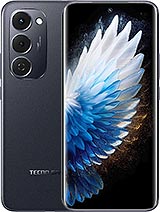 Tecno Spark 40 Pro+
AnTuTu
- v10
- v11
Poco X8 Pro
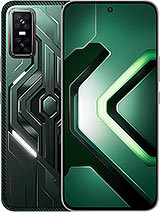 Infinix GT 30
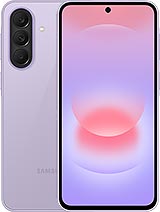 Galaxy A37
Tecno Pova 8
Motorola Edge 60 Fusion
Galaxy A17 5G
Galaxy A07 4G
Galaxy A37
Tecno Pova 8
Motorola Edge 60 Fusion
Galaxy A17 5G
Galaxy A07 4G
3DMark
- Wild Life Extreme (Highest)
- Wild Life Extreme (Lowest)
Poco X8 Pro
Redmi Note 15 5G
Motorola Edge 60 Fusion
Tecno Pova 8
Infinix Note Edge
Galaxy A17 5G
Galaxy A07 4G
Thermal-throttling
The Dimensity 7100 might not be a particularly powerful chip, but on the plus side, it doesn't really put out much heat either. It barely even suffers from thermal throttling. Plus, the phone's surface remains quite comfortable to the touch.
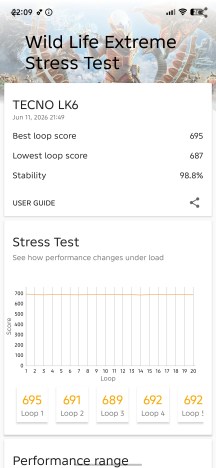
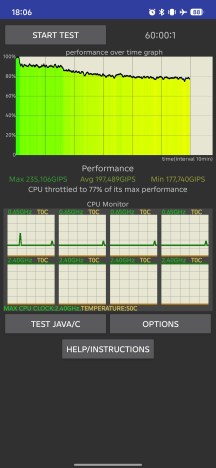
Thermal-throttling
Camera - photo and video quality
Single real 50MP camera on the back, 13MP selfies
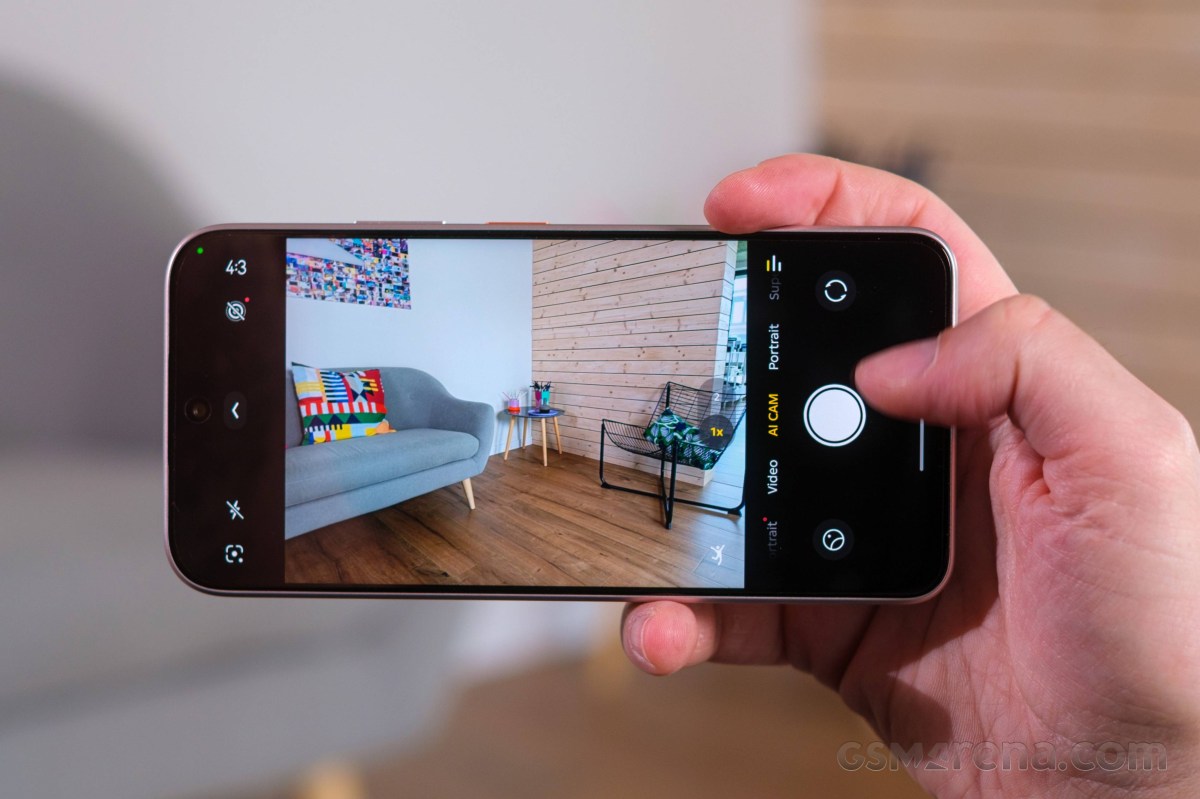
The Pova 8 is no cameraphone, and its hardware reflects its relatively modest aspirations in the field. Still, it's got a well-specced main camera on the back as well as a good front-facing unit.
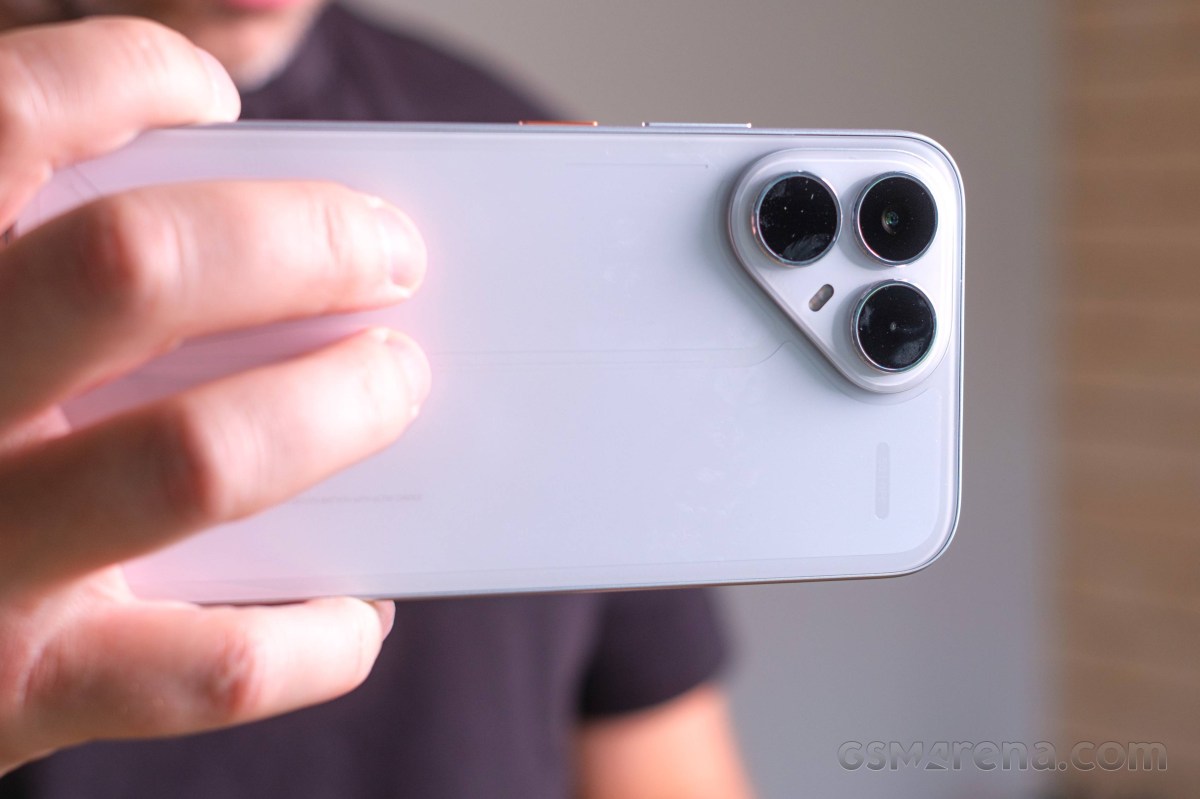
The rear camera is based either on the GalaxyCore GC50D1 sensor or the more well-known Sony Lytia 600 - the hardware manifest lists both models. Both are the same in their key specs, with a 1/2.0" or thereabout optical format, 0.8µm individual pixels and a Quad Bayer color filter array. The EXIF data insists on a 23mm equivalent focal length, but in hardware apps we're looking at a 24.9mm figure and that's more like the field of view we're seeing in the photos.
There's supposedly a second camera on the back, which bodes well with there being another 2MP sensor in the list of internals, but there's no apparent way to access it directly.
On the front, there's a 13MP conventional sensor (as in, not a Quad Bayer type), paired with a fixed-focus 24mm lens (no discrepancies with the focal length there).
- Wide (main): 50MP GalaxyCore GC50D1 (or Sony Lytia 600, 1/1.95", 0.8µm-1.6µm); 23mm (but probably 25mm), f/1.8, PDAF (9cm - ∞); 1440p30/1080p60 video recording.
- Front camera: 13MP GalaxyCore GC13A0 (1/3.06", 1.12µm); 24mm, f/2.2, fixed focus; 1440p30/1080p60.
Daylight photo quality
Main camera
The Pova 8's 1x photos in good light are actually pretty great. They are sharp and excellently detailed and detail has a nicely fine structure that eludes even some flagships. Dynamic range is good, though the phone does have a tendency to keep its shadows too dark for our liking. The auto white balance is accurate and colors are looking good, though saturation could use a nudge.










Daylight samples, main camera (1x)
That lack of vibrance is also felt in photos of people, where skin tones are a bit lifeless, though we wouldn't really call it a dealbreaker. The Portrait mode's bokeh levels are reasonable and the subject detection is quite good.






Human subjects, main camera: Photo mode, 1x • Portrait mode, 24mm • Portrait mode, 35mm
The full-res images, particularly the outdoor ones, show a tendency for overexposure, but they're also noticeably less contrasty than their binned counterparts, with brighter shadows. Detail is a little... flaky, but it's not a direct upscale job from the 12.5MP shots, so there just might be a smidge more detail if the light and subject are right and you look closely enough.




Daylight samples, main camera (1x), 50MP
With that in mind, the 12.5MP 2x zoom photos, which are seemingly center crops from the 1x 50MP ones, aren't exactly pin-sharp, but they're pretty decent nonetheless.











Daylight samples, main camera (2x)
2x photos of people are alright, and the drop in sharpness could be worth the better perspective or tighter framing. The Portrait mode shots at 50mm are noticeably softer than the Photo mode ones, though.
Human subjects, main camera: Photo mode, 2x* Portrait mode, 50mm
If you're after closeups, the main camera's 9cm minimum focusing distance will get you reasonable results. Per-pixel quality does drop at 2x, of course, but it could still be the better choice in some instances.



Close-up samples, main camera (1x)



Close-up samples, main camera (2x)
Low-light photo quality
Main camera
Low-light photos at 1x are also very good. We're looking at shots that have wide dynamic range, mostly accurate white balance and quite liberal saturation (some may say it's a touch too much). Detail is good to very good overall, depending on scene and subject matter, with the expected softening in the darker areas.








Low-light samples, main camera (1x)
At 2x zoom, the combined effects of the aggressive sharpening with the underlying softness make 1:1 examination an unpleasant task, but if you stand back a little, the photos are usable.








Low-light samples, main camera (2x)
Selfies
Selfies are pretty great on the Pova 8. Detail is very good in daylight and not too shabby in the dark either. Dynamic range is good and skin tones are looking nice though colors are a little muted once again (maybe not that indoor low-light shot, which is all over the place in many ways).








Selfie samples
Video quality
The Pova 8's video recording capabilities aren't too wide-ranging, with the top modes being 1440p30 or 1080p60 on both cameras, depending on whether you prioritize resolution or frame rate. Stabilization is limited to 1080p30 though, so both 'top' quality settings will need external means of ensuring stability. There's no HDR recording and no Pro video mode.
You can hit '> play' below and use the '>| next' button to advance through the playlist of all video samples, or you can watch the full playlist on YouTube.
Our daylight videos didn't quite reach the advertised 30fps, instead sticking to around 27.8fps, while the low-light clips were more like 29.5fps - we're not too sure what to make of that.
The stabilized 1080p30 clips are decently detailed, but the 1440p are noticeably better. 2x 1080p footage is also alright. Dynamic range and colors are pretty excellent.



Video screengrabs, daylight: 1x, 1080p • 1x, 1440p • 2x, 1080p
In the dark, you can also expect meaningfully sharper results from the 1440p mode, though it will be shaky if you're shooting handheld. 2x 1080p is probably usable, barely.



Video screengrabs, low light: 1x, 1080p • 1x, 1440p • 2x, 1080p
Camera quality verdict
There's no escaping the fact that the Tecno Pova 8 is missing an ultrawide camera, which is more or less a given in the class. The two cameras that it does have, it puts to good use though. Its rear camera captures quite nice photos both in daytime and at night, and is more or less alright at 2x zoom too. The front-facing camera takes quite great selfies too. When it comes to video, the lack of 4K is a bit of a pain point, as is the lack of stabilization in the top modes, though the stabilization you do get in 1080p30 isn't too great anyway. The 1440p footage is still quite nice if you can find means to stabilize the phone.
Final words, our verdict, pros and cons
The competition
Right now it's hard to find the Tecno Pova 8 outside of India. As of writing this review, on Flipkart, a base 6GB/128GB unit is selling for INR 30,000 or around €280. Going up to the 8GB/128GB variant results in an INR 32,000 price tag, or around €295. That's an excellent price in the grand scheme of things.
While you can certainly do worse for yourself than the Pova 8, there are also quite a few interesting alternatives within the same budget.
Current Samsung prices on Flipkart seem to be a bit unreasonable for one reason or another, but looking around on Amazon.de, we did find the Samsung Galaxy A37 - the base 6GB/128GB model- sitting comfortably below the €280 mark. The Galaxy seems like a much better-rounded device. Its 120Hz Super AMOLED display is a definite advantage; the Exynos 1480 chipset offers a nice little boost over the Dimensity 7100, and the same goes for the faster storage. You also get an ultrawide and a macro with the Samsung. The things the Tecno has going for it is the larger battery and the rear display that adds a couple of cool points.
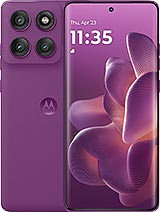

Samsung Galaxy A37 • Xiaomi Redmi Note 15 Pro • Motorola Edge 60 Pro • Infinix GT 30 Pro
Xiaomi has the slightly older but still very popular Redmi Note 15 Pro. It fits the bill perfectly and also delivers some clear upgrades over the Tecno. The large 6.83-inch, 120Hz, 12-bit, AMOLED display with Dolby Vision support is a clear highlight. Again, you get an ultrawide camera to complement the main shooter, and the Dimensity 7400 Ultra chipset. Unfortunately, the Redmi's storage is comprised of slow UFS 2.2 chips just like the Pova 8, and its battery isn't as large.
If you manage to save up a few more bucks, the excellent Poco X8 Pro certainly deserves a mention as well. It has a more powerful chipset and an arguably even better display.
If you are shopping for a Motorola internationally, you might find that the Edge 60 Pro is a bit too pricey to compete with the Tecno, but in India that's not the case. Once again, it brings a notably better display to the table, as well as a markedly faster Dimensity 8350 chipset and faster UFS 4.0 storage. Not to mention a powerful triple-camera setup on the back, complete with a dedicated 3x telephoto. That's pretty hard to come by at this price point.
Even within its own ranks, sort of, from sister brand Infinix, there is the GT 30 Pro. Yet another instance of a much better display on this one, as well as a faster chipset and faster storage. There is an additional ultrawide camera as well. You will have to live with a notably smaller battery, though.
Our verdict
The Tecno Pova 8 is a bit of a mixed bag. On one hand, it has plenty of personality. The futuristic design, complete with the quirky Alive Matrix Display, helps it stand out in a sea of generic-looking midrangers. It also delivers excellent battery life thanks to its huge 8,000 mAh battery, offers dependable everyday performance from the Dimensity 7100 chipset, ships with a generous retail bundle and captures surprisingly good photos from both its main and selfie cameras.
Unfortunately, those positives are offset by a few compromises that are somewhat difficult to swallow. The IPS LCD panel is by far the weakest part of the package. Its slow pixel response times lead to noticeable smearing while scrolling, and while the 144Hz refresh rate looks impressive on paper, the implementation doesn't consistently take advantage of it. The lack of an ultrawide camera also feels like an omission in 2026, and charging performance, despite the advertised 45W support, falls a little short of expectations.
None of these shortcomings would necessarily be dealbreakers on their own. The problem is that today's midrange market is overflowing with alternatives offering brighter AMOLED displays, faster chipsets, more versatile camera systems and quicker charging at very similar prices. Tecno's enormous battery remains a genuine differentiator, but for many buyers it probably won't outweigh everything they would be giving up.
If long battery life is your absolute top priority and you enjoy the unique design, the Pova 8 is a competent smartphone. For everyone else, however, there are simply too many stronger all-round alternatives available in the same price bracket.
Pros
- Excellent battery life from the massive 8,000 mAh battery.
- Distinctive design with fun Alive Matrix Display.
- Good main camera with solid daytime and nighttime performance.
- Very capable selfie camera.
- Good stereo speakers.
- Generous retail package with charger and case included.
- microSD expansion (market dependent), IR blaster, NFC and FM radio.
Cons
- LCD display has slow pixel response times and noticeable smearing.
- No ultrawide camera.
- Charging is slower than the advertised figures suggest.
- UFS 2.2 storage is becoming dated for the price.
- 144Hz refresh rate implementation is inconsistent.
Introduction, specs, unboxing
Introduction
Tecno's Pova series usually works on a shoestring budget, but usually manges to deliver a surprising bit of hardware here and there. This time around Tecno focused on visual flair. The Pova 8 certainly looks interesting with its semi-transparent panel, funky camera island shape and the inclusion of what Tecno is calling an "Alive Matrix Display."
The Pova 8 also has some practical things going for it, like a big 8,000 mAh battery. The Pova 8 is also a dual-SIM 5G device and is powered by the decently capable MediaTek Dimensity 7100 chipset. Tecno even has two home-grown extra chips helping on the inside - one with network signal, the other with Wi-Fi.
Tecno Pova 8 specs at a glance:
- Body: 165.7x78.5x8.8mm, 225g; plastic back and plastic frame; IP64 dust tight and water resistant (water splashes), Round matrix display (on the back), MIL-STD-810H compliant.
- Display: 6.76" IPS LCD, 144Hz, 1080x2344px resolution, 19.53:9 aspect ratio, 381ppi.
- Chipset: Mediatek Dimensity 7100 (6 nm).
- Memory: 128GB 6GB RAM, 128GB 8GB RAM, 256GB 8GB RAM; UFS 2.2; microSDXC (uses shared SIM slot) - India model only.
- OS/Software: Android 16, HIOS 16.
- Rear camera: Wide (main): 50 MP, f/1.8, 23mm, 1/1.95", 0.8µm, PDAF.
- Front camera: 13 MP, f/2.2, 24mm (wide).
- Video capture: Rear camera: 1440p@30fps, 1080p@30/60fps; Front camera: Yes.
- Battery: 8000mAh; 45W wired, 50% in 35 min, 10W reverse wired.
- Connectivity: 5G; Wi-Fi 5; BT 5.4; NFC; FM radio, recording; Infrared port.
- Misc: Fingerprint reader (side-mounted); stereo speakers (with Dolby Atmos).
The main 50MP Sony LYTIA 600 camera won't be topping any quality charts, but it is a proven performer that should be above expectations for the class. While you do have to settle for an LCD panel, instead of an OLED, at least it can refresh at up to 144Hz.
On the software side of things, Tecno invested in what it calls "Practical AI," offering things like AI Noise Cancellation and AI YouTube Summary. The Pova 8 itself comes with the promise of two major OS updates and three years of security patches. But we'll get to all that in a bit.
Unboxing
The Pova 8 ships in a two-piece cardboard box. It feels very sturdy and should protect the phone just fine during shipping. There is a cradle for the phone on the inside. It is made of cardboard, and there is seemingly no plastic in the packaging at all, which we can appreciate. The box itself is quite eye-catching thanks to its bright blue/violet (depending on how the light hits it) color scheme.
The Pova 8 ships with a 45W Tecno-branded charger - enough to maximize its charging potential. You also get a USB Type-A to Type-C cable, as far as we can tell, that cable is not actually proprietary and doesn't appear to use extra pins. However, the charger is designed to push up to 4.5A of current through said cable, so if you do end up replacing it, make sure you at least match that. Mind that if the Pova 8 comes to Europe at some point, the charger will be absent from the bundle.
Tecno also, rather generously, throws in a clear hard case for the Pova 8, so you can start using it right away worry-free.
Design, build quality, handling
Design, build quality, handling
Tecno went a bit experimental with the design on the Pova 8. Nothing too crazy, but definitely eye-catching. Of course, we are talking about the semi-transparent back design, which, by Tecno's own admission, was inspired by "interstellar spaceships". We can definitely see that. The Pova 8 has this futuristic thing going for it. The "signature triangle deco", as Tecno calls the camera island, is also tied together nicely with the rest of the design.
That said, we don't exactly get why the design team felt the need to include seemingly random writing on the back side. Near the top, next to the camera island, you can find "5G|NFC" and further down, written horizontally across are the inscriptions "MEDIATEK DIMENSITY 7100" and below that "8000 mAh HI-ENERGY DENSITY BATTERY WITH ULTRA CHARGE". It's a bit tacky in our opinion, but thankfully the text mostly blends in and disappears, at least on our white review unit.
Speaking of colors, ours is actually called "Arc White". Globally, it will be joined by "Graphite Black", "Helios Orange," and "Echo Green". In India, in particular, the Pova 8 has three different or at least differently-named color options. Techo just calls them "distinctive", so we can't exactly be sure if they are just the same colors with different names or not. Anyway, these are called: "16-Bit White", "Terminal Green," and "Plasma Orange".
While we haven't seen either in person, it seems that the green and orange variants are definitely not meant to blend in and just stay unnoticed.
The Pova 8 feels solid and well-made. It has practically no flex in the chassis. The back is made of plastic, and so is the middle frame. There is some toughened glass on the front covering the display, but Tecno does not specify exactly what kind. The Pova 8 is marketed as "dust-tight and water-resistant". It has IP64 ingress protection and claims MIL-STD-810H compliance. There is, surprisingly, a rather thick rubber gasket around the SIM tray. Even so, we don't think submerging it is a good idea.
Circling back to colors for a bit, we definitely like how the orange accent finish on the power button looks on our white review unit. While on the topic of controls, there is nothing particularly weird about the Pova 8's setup. The power button and volume rockers are pretty well-positioned height-wise on the right-hand side. They are clicky and responsive.
The power button incorporates a capacitive fingerprint reader. It is both snappy and responsive.
Tecno Pova 8
There is practically nothing on the left side. The top houses an IR blaster, which is convenient. Just like the writing on the back, we don't particularly appreciate the "Dolby Atmos" text on here. The bottom side has a large speaker grill, the main microphone hole, the SIM tray and the Type-C port.
There are no obvious controls visible at the front of the display. The earpiece/second speaker is just a slit hidden away above the display. All of the sensors are also hidden above the display.
Last but definitely not least, there is the Alive Matrix Display that sits underneath the two rear cameras. It consists of 117 total dots - 11 by 11 with a dot missing from each corner. The LED array is white and can get pretty bright. You can, of course, adjust said brightness. Techo has a set of 49 predefined "scenarios" for the LED matrix, recognizing and reacting to things like calls, notifications, music, gaming, charging and more.
There is even a "spin the bottle" game you can play here, as well as a "throw the dice" game, and you can create your own light sequence as well. It's hard to imagine Techo hasn't taken at least some inspiration from Nothing on this front.
Our lab tests - display, battery life, charging speed, speaker
Display
The Pova 8 is a budget phone, so some corners had to be cut. The 6.76-inch display is one example. It still offers FHD+ resolution of FHD+ and can refresh at up to 144Hz, but it's not the most impressive around.
In our standardized measurements, the Pova 8 almost managed to crack 1,000 nits of brightness. That is with auto brightness turned on, as well as the additional "extra brightness" toggle enabled. In regular mode, by just maxing out the slider, we got around 650 nits. This is far from spectacular, but you shouldn't have too much trouble seeing the display even in sunny conditions. Direct sunlight may wash out colors, but still.
Max display brightness test
White test pattern (nits)
- Manual (75% fill)
- Auto (75% fill)
- Peak Auto (10% fill)
Redmi Note 15 Pro 5G
Poco X8 Pro
Infinix Note 50 Pro 4G
Tecno Pova 8
Galaxy A26
Galaxy A17
Galaxy A07 4G
The 144Hz refresh rate sounds good on paper, but the Pova 8 doesn't exactly offer a whole lot of flexibility when it comes to actually using said refresh rate. There is a "high" refresh rate mode with per-app settings that does allow many apps to push past the 60Hz mark, but don't expect great consistency. High refresh rate gaming was always going to be a bit of a pipe dream with the Dimensity 7100 chipset.
The thing that really ruined our visual experience, however, was sluggish pixel response times. The Pova 8 suffers from a lot of smearing while scrolling. On top of that, the display surface is quite reflective, which is not ideal.
As you can imagine, there is no hardware HDR support here. The phone does report that it can decode HDR10, HDR10+ and HLG, just no Dolby Vision, but it won't be able to take full advantage of it. On a more positive note, at least it has the highest possible Google Widevine L1 DRM certification, allowing apps like Netflix to offer up FullHD streams.
Battery life
The large 8,000 mAh battery is arguably the key selling point of the Pova 8. With its fairly efficient chipset, it is well positioned to achieve excellent battery life.
And while the Pova 8 certainly does not disappoint in the battery department, frankly, we expected a bit more still. The Active Use Score of over 17 hours should be enough to live up to Tecno's marketing claims of two-day battery life. At least with most casual users.
Charging speed
The Pova 8 supports 45W Tecno fast charging. It is proprietary, but luckily you do get the charger and accompanying cable in the box in most places.
To be perfectly frank, we expected a bit faster charging times. We made sure to do a few charging runs just to make sure everything was working properly and diligently selected the kind of obscure rapid charging option from the charging notification each time. Tecno claims 45W but in our measurements, the actual charging never really exceeded 25W.
Tecno claims that the Pova 8 can fill its large battery up to 50% in 35 minutes. In our experience it is more like 39 minutes. Fifteen minutes on the charger resulted in 22% charge, thirty minutes gave us 39% and a full charge took just shy of an hour and a half. Not particularly impressive numbers, but not terrible either.
Charging speed
- in 15 min
- in 30 min
- Time to full charge (from 0%)
Infinix Note 50 Pro 4G
Galaxy A17 5G
Redmi Note 15 Pro 5G
Infinix Note Edge
Galaxy A07 4G
Tecno Pova 8
Redmi 15 5G
In terms of battery protection features, Tecno offers Bypass Charging option, AI Charging protection (based on your routine), and Custom Charging Protection (setting a charge limit between 80% and 95%).
Speakers - loudness and quality
The Tecno Pova 8 has a dedicated bottom-firing speaker. The earpiece is outputting some audio as well and acting as a second channel, of sorts. However, the earpiece is really quiet, almost as if it is not amplified at all. Plus, you don't really get proper stereo channel isolation with the bottom speaker outputting both the left and right channels - probably so you can even hear the left. That aside, quality is actually surprisingly decent. Nothing spectacular, but mids come through clearly.
Unfortunately, the Pova 8 isn't particularly loud at all.
There are some rather interesting onboard audio enhancements to explore. The Pova 8 seems to have Dolby Atmos support, and the settings menu even suggests it's not just for headphone use. We really don't see how any of the "smart" presets will even make much of a difference since the phone effectively lacks stereo, but it is what it is.
One of the "practical AI" features is "Call Noise Suppression", or at least that's what it's called in the settings menu. That title undersells the feature a little bit since it can actually work for recordings and in-game comms as well as calls.
Call Noise Suppression
There is also standard Noise Control, which is your basic active noise cancellation. Ot top of that, there is a Smart option that promises to only activate when there is surrounding noise. The third and most interesting option is called "Pure Voice". The way it works is that the user records their own voice and creates a "voice print", which the system can then identify and isolate, filtering out any other voices. However, Tecno does note that this will only work correctly in a relatively quiet environment like an office setting.
Use the Playback controls to listen to the phone sample recordings (best use headphones). We measure the average loudness of the speakers in LUFS. A lower absolute value means a louder sound. A look at the frequency response chart will tell you how far off the ideal "0db" flat line is the reproduction of the bass, treble, and mid frequencies. You can add more phones to compare how they differ. The scores and ratings are not comparable with our older loudspeaker test. Learn more about how we test here.
Connectivity
The Pova 8 is a dual-SIM device. It has two Nano-SIM slots that can offer concurrent SA/NSA Sub-6 connectivity. Unfortunately, there is no eSIM support. Location services include GPS, GLONASS, GALILEO and BDS support. Local connectivity is covered by dual-band Wi-Fi 6/ac and Bluetooth 5.4 with LE support. There is NFC on board as well as an IR blaster. There is even an onboard FM radio receiver. You just need to plug in a pair of Type-C headphones to act as an antenna to use it.
Our review unit lacks a microSD card slot, but a few device listings online do mention a hybrid SIM slot 2 that can accommodate expandable storage. As far as we can tell, the Indian model has it.
The Type-C port is backed up by a simple USB 2.0 data connection, which means a theoretical throughput of up to 480 Mbps. There is USB Host/OTG support, but nothing fancy beyond that, like video output over USB Alt mode.
The Pova 8 has a pretty decent sensor loadout. That includes an st lsm6dso accelerometer and gyroscope combo, a memsic mmc5617 magnetometer and compass combo and a sensorek stk63761A light and proximity sensor combo. Yes, despite its modest price, the Pova 8 gets an actual hardware proximity sensor and not a virtual one. There is no barometer on board.
Software and performance
HiOS 16 on top of Android 16
The Pova 8 boots Android 16 with Tecno's own HiOS custom software on top. Our review unit arrived with HiOS 16.2, which didn't seem drastically different than the 16.0 version we have previously seen.
The Pova 8 comes with the promise of two major OS updates and a total of three years of security patches. A pretty modest support cycle by modern standards, if we have to be fair, but still alright for a budget device.
HiOS 16 brings a notable expansion of the customization options. The updated Always-on Display offers a wider selection of styles and personalization features, though it still isn't truly "always on" and only remains visible for up to 15 seconds at a time. The lock screen and home screen customization has also been enhanced with depth effects, allowing for a more modern and personalized look.
There is also an AI Theme Generator and a 3D Wallpaper generator.
Customization options
The Android OS, even with Tecno's HiOS skin, is pretty straightforward.
HiOS 16
The lockscreen has a couple of shortcuts on the bottom - one for the camera, and the other for the flashlight.
Multitasking features include split-screen and pop-up window modes for supported apps - nothing out of the ordinary.
Multi-tasking
HiOS 16 comes with a handful of pre-installed apps and utilities, but the overall software package remains reasonably clean. Tecno includes its own Gallery, Video Player and Browser apps, while notably avoiding the addition of a proprietary app store.
The software also features Tecno's in-house AI assistant, Ella. It supports voice wake-up and spoken responses and offers a broad range of AI-powered tools and features. Most of its functionality relies on an active internet connection to access cloud-based AI models (you can choose between quite a few of them), though basic device controls and system-related tasks can still be handled locally without connectivity.
Ella
We already mentioned the Alive Matrix Display briefly, but we should also go over the basic customization options and features it offers. As a refresher - it is a 117-dot white LED matrix on the back of the phone, housed inside what looks like a third camera module.
Status Light
You can, of course, use the LED array as a notification light replacement with a little extra sophistication. There are actually 49 predefined "scenarios" for the LED matrix, recognizing and reacting to things like calls, notifications, music, gaming, charging and more. You can adjust the brightness, put the display on a schedule and even design your very own animations using the pretty intuitive tool.
By Tecno's own description, the AI features included with the Pova 8 are meant to be practical and "designed for everyday efficiency". We already took a quick look at the company's own Ella assistant and browsing through its menus, it comes as no surprise that it can actually do quite a few things like write or refine text, generate images and do quite a few tasks with your phone as well, like call people for you.
Ella features
One of the more interesting features Tecno advertised to us for the Pova 8 is the AI YouTube summary. However, we didn't really find exactly how to make it work on our unit.
An AI health assistant is also part of the loadout. This one we did spot, but we presume it needs access to a lot of historical stats and data to actually start being useful.
AI Health
We already mentioned the Call Noise Suppression feature, and it is worth revisiting since it is not something you see every day, particularly the "Pure Voice" option that is meant to detect your particular voice based on a voiceprint and only let that come through. We did give it a try ourselves and got mixed but not disappointing results. As long as there isn't too much noise in the environment and only like one or two additional people are talking at the same time as you, ideally not too loud and a bit further away, it works as advertised.
Call Noise Suppression
There are a few more AI tools scattered around, notably in Tecno's native image gallery and particularly the image editor. You can use AI to remove shadows, reflections and flare, as well as delete objects from the frame and generatively expand the size of the image.
AI image editing tools
Performance and benchmarks
The Pova 8 runs on the MediaTek Dimensity 7100 chipset. It is not a powerhouse by any stretch of the imagination, but it is still a very recent chip with great features and connectivity, made on an efficient 6 nm TSMC node.
In the CPU department, we find a rather conventional and a bit "old school" symmetric four by four setup with four Cortex-A78 units, working at up to 2.4 GHz and four Cortex-A55 ones, clocked at up to 2.0 GHz. Nothing too fancy. The onboard GPU is a Mali-G610 MC2 clocked at 1.0 GHz.
The Pova 8 starts with 6GB of RAM, but that is just for the base 128GB storage version. If you step up to 256GB, you get 8GB of RAM, and in some markets, an 8GB/128GB version existс as well. The storage chips are of the rather modest UFS 2.2 variety, but we can't really be too mad considering the budget price point. It is also perhaps worth noting that Tecno offers three years of free 256GB cloud storage for Pova 8 users and, in select markets, 3 months of Google AI Plus (2 TB) for free as well.
The actual benchmark results confirm that the Dimensity 7100 is not a particularly powerful chip. You can do a lot better in this price bracket if that is what you are after. That said, it does alright in both the CPU and GPU departments, and beats the likes of Helio G series chips.
GeekBench 6
- Single-core
- Multi-core
Poco X8 Pro
Motorola Edge 60 Fusion
Redmi Note 15 5G
Tecno Pova 8
Infinix Note Edge
Galaxy A07 4G
Tecno Spark 40 Pro+
AnTuTu
- v10
- v11
Poco X8 Pro
Infinix GT 30
Galaxy A37
Tecno Pova 8
Motorola Edge 60 Fusion
Galaxy A17 5G
Galaxy A07 4G
3DMark
- Wild Life Extreme (Highest)
- Wild Life Extreme (Lowest)
Poco X8 Pro
Redmi Note 15 5G
Motorola Edge 60 Fusion
Tecno Pova 8
Infinix Note Edge
Galaxy A17 5G
Galaxy A07 4G
Thermal-throttling
The Dimensity 7100 might not be a particularly powerful chip, but on the plus side, it doesn't really put out much heat either. It barely even suffers from thermal throttling. Plus, the phone's surface remains quite comfortable to the touch.
Thermal-throttling
Camera - photo and video quality
Single real 50MP camera on the back, 13MP selfies
The Pova 8 is no cameraphone, and its hardware reflects its relatively modest aspirations in the field. Still, it's got a well-specced main camera on the back as well as a good front-facing unit.
The rear camera is based either on the GalaxyCore GC50D1 sensor or the more well-known Sony Lytia 600 - the hardware manifest lists both models. Both are the same in their key specs, with a 1/2.0" or thereabout optical format, 0.8µm individual pixels and a Quad Bayer color filter array. The EXIF data insists on a 23mm equivalent focal length, but in hardware apps we're looking at a 24.9mm figure and that's more like the field of view we're seeing in the photos.
There's supposedly a second camera on the back, which bodes well with there being another 2MP sensor in the list of internals, but there's no apparent way to access it directly.
On the front, there's a 13MP conventional sensor (as in, not a Quad Bayer type), paired with a fixed-focus 24mm lens (no discrepancies with the focal length there).
- Wide (main): 50MP GalaxyCore GC50D1 (or Sony Lytia 600, 1/1.95", 0.8µm-1.6µm); 23mm (but probably 25mm), f/1.8, PDAF (9cm - ∞); 1440p30/1080p60 video recording.
- Front camera: 13MP GalaxyCore GC13A0 (1/3.06", 1.12µm); 24mm, f/2.2, fixed focus; 1440p30/1080p60.
Daylight photo quality
Main camera
The Pova 8's 1x photos in good light are actually pretty great. They are sharp and excellently detailed and detail has a nicely fine structure that eludes even some flagships. Dynamic range is good, though the phone does have a tendency to keep its shadows too dark for our liking. The auto white balance is accurate and colors are looking good, though saturation could use a nudge.
Daylight samples, main camera (1x)
That lack of vibrance is also felt in photos of people, where skin tones are a bit lifeless, though we wouldn't really call it a dealbreaker. The Portrait mode's bokeh levels are reasonable and the subject detection is quite good.
Human subjects, main camera: Photo mode, 1x • Portrait mode, 24mm • Portrait mode, 35mm
The full-res images, particularly the outdoor ones, show a tendency for overexposure, but they're also noticeably less contrasty than their binned counterparts, with brighter shadows. Detail is a little... flaky, but it's not a direct upscale job from the 12.5MP shots, so there just might be a smidge more detail if the light and subject are right and you look closely enough.
Daylight samples, main camera (1x), 50MP
With that in mind, the 12.5MP 2x zoom photos, which are seemingly center crops from the 1x 50MP ones, aren't exactly pin-sharp, but they're pretty decent nonetheless.
Daylight samples, main camera (2x)
2x photos of people are alright, and the drop in sharpness could be worth the better perspective or tighter framing. The Portrait mode shots at 50mm are noticeably softer than the Photo mode ones, though.
Human subjects, main camera: Photo mode, 2x* Portrait mode, 50mm
If you're after closeups, the main camera's 9cm minimum focusing distance will get you reasonable results. Per-pixel quality does drop at 2x, of course, but it could still be the better choice in some instances.
Close-up samples, main camera (1x)
Close-up samples, main camera (2x)
Low-light photo quality
Main camera
Low-light photos at 1x are also very good. We're looking at shots that have wide dynamic range, mostly accurate white balance and quite liberal saturation (some may say it's a touch too much). Detail is good to very good overall, depending on scene and subject matter, with the expected softening in the darker areas.
Low-light samples, main camera (1x)
At 2x zoom, the combined effects of the aggressive sharpening with the underlying softness make 1:1 examination an unpleasant task, but if you stand back a little, the photos are usable.
Low-light samples, main camera (2x)
Selfies
Selfies are pretty great on the Pova 8. Detail is very good in daylight and not too shabby in the dark either. Dynamic range is good and skin tones are looking nice though colors are a little muted once again (maybe not that indoor low-light shot, which is all over the place in many ways).
Selfie samples
Video quality
The Pova 8's video recording capabilities aren't too wide-ranging, with the top modes being 1440p30 or 1080p60 on both cameras, depending on whether you prioritize resolution or frame rate. Stabilization is limited to 1080p30 though, so both 'top' quality settings will need external means of ensuring stability. There's no HDR recording and no Pro video mode.
You can hit '> play' below and use the '>| next' button to advance through the playlist of all video samples, or you can watch the full playlist on YouTube.
Our daylight videos didn't quite reach the advertised 30fps, instead sticking to around 27.8fps, while the low-light clips were more like 29.5fps - we're not too sure what to make of that.
The stabilized 1080p30 clips are decently detailed, but the 1440p are noticeably better. 2x 1080p footage is also alright. Dynamic range and colors are pretty excellent.
Video screengrabs, daylight: 1x, 1080p • 1x, 1440p • 2x, 1080p
In the dark, you can also expect meaningfully sharper results from the 1440p mode, though it will be shaky if you're shooting handheld. 2x 1080p is probably usable, barely.
Video screengrabs, low light: 1x, 1080p • 1x, 1440p • 2x, 1080p
Camera quality verdict
There's no escaping the fact that the Tecno Pova 8 is missing an ultrawide camera, which is more or less a given in the class. The two cameras that it does have, it puts to good use though. Its rear camera captures quite nice photos both in daytime and at night, and is more or less alright at 2x zoom too. The front-facing camera takes quite great selfies too. When it comes to video, the lack of 4K is a bit of a pain point, as is the lack of stabilization in the top modes, though the stabilization you do get in 1080p30 isn't too great anyway. The 1440p footage is still quite nice if you can find means to stabilize the phone.
Final words, our verdict, pros and cons
The competition
Right now it's hard to find the Tecno Pova 8 outside of India. As of writing this review, on Flipkart, a base 6GB/128GB unit is selling for INR 30,000 or around €280. Going up to the 8GB/128GB variant results in an INR 32,000 price tag, or around €295. That's an excellent price in the grand scheme of things.
While you can certainly do worse for yourself than the Pova 8, there are also quite a few interesting alternatives within the same budget.
Current Samsung prices on Flipkart seem to be a bit unreasonable for one reason or another, but looking around on Amazon.de, we did find the Samsung Galaxy A37 - the base 6GB/128GB model- sitting comfortably below the €280 mark. The Galaxy seems like a much better-rounded device. Its 120Hz Super AMOLED display is a definite advantage; the Exynos 1480 chipset offers a nice little boost over the Dimensity 7100, and the same goes for the faster storage. You also get an ultrawide and a macro with the Samsung. The things the Tecno has going for it is the larger battery and the rear display that adds a couple of cool points.
Samsung Galaxy A37 • Xiaomi Redmi Note 15 Pro • Motorola Edge 60 Pro • Infinix GT 30 Pro
Xiaomi has the slightly older but still very popular Redmi Note 15 Pro. It fits the bill perfectly and also delivers some clear upgrades over the Tecno. The large 6.83-inch, 120Hz, 12-bit, AMOLED display with Dolby Vision support is a clear highlight. Again, you get an ultrawide camera to complement the main shooter, and the Dimensity 7400 Ultra chipset. Unfortunately, the Redmi's storage is comprised of slow UFS 2.2 chips just like the Pova 8, and its battery isn't as large.
If you manage to save up a few more bucks, the excellent Poco X8 Pro certainly deserves a mention as well. It has a more powerful chipset and an arguably even better display.
If you are shopping for a Motorola internationally, you might find that the Edge 60 Pro is a bit too pricey to compete with the Tecno, but in India that's not the case. Once again, it brings a notably better display to the table, as well as a markedly faster Dimensity 8350 chipset and faster UFS 4.0 storage. Not to mention a powerful triple-camera setup on the back, complete with a dedicated 3x telephoto. That's pretty hard to come by at this price point.
Even within its own ranks, sort of, from sister brand Infinix, there is the GT 30 Pro. Yet another instance of a much better display on this one, as well as a faster chipset and faster storage. There is an additional ultrawide camera as well. You will have to live with a notably smaller battery, though.
Our verdict
The Tecno Pova 8 is a bit of a mixed bag. On one hand, it has plenty of personality. The futuristic design, complete with the quirky Alive Matrix Display, helps it stand out in a sea of generic-looking midrangers. It also delivers excellent battery life thanks to its huge 8,000 mAh battery, offers dependable everyday performance from the Dimensity 7100 chipset, ships with a generous retail bundle and captures surprisingly good photos from both its main and selfie cameras.
Unfortunately, those positives are offset by a few compromises that are somewhat difficult to swallow. The IPS LCD panel is by far the weakest part of the package. Its slow pixel response times lead to noticeable smearing while scrolling, and while the 144Hz refresh rate looks impressive on paper, the implementation doesn't consistently take advantage of it. The lack of an ultrawide camera also feels like an omission in 2026, and charging performance, despite the advertised 45W support, falls a little short of expectations.
None of these shortcomings would necessarily be dealbreakers on their own. The problem is that today's midrange market is overflowing with alternatives offering brighter AMOLED displays, faster chipsets, more versatile camera systems and quicker charging at very similar prices. Tecno's enormous battery remains a genuine differentiator, but for many buyers it probably won't outweigh everything they would be giving up.
If long battery life is your absolute top priority and you enjoy the unique design, the Pova 8 is a competent smartphone. For everyone else, however, there are simply too many stronger all-round alternatives available in the same price bracket.
Pros
- Excellent battery life from the massive 8,000 mAh battery.
- Distinctive design with fun Alive Matrix Display.
- Good main camera with solid daytime and nighttime performance.
- Very capable selfie camera.
- Good stereo speakers.
- Generous retail package with charger and case included.
- microSD expansion (market dependent), IR blaster, NFC and FM radio.
Cons
- LCD display has slow pixel response times and noticeable smearing.
- No ultrawide camera.
- Charging is slower than the advertised figures suggest.
- UFS 2.2 storage is becoming dated for the price.
- 144Hz refresh rate implementation is inconsistent.